
Mastering Buoyancy Control: Tips for Efficient Diving.
Peter Letts Jan 17, 2022

Mastering Buoyancy Control: The Complete Guide for New Scuba Divers
Key Takeaways
-
Perfect buoyancy control reduces air consumption by up to 30% and protects marine environments from damage
-
Proper weighting at 5 meters depth with an empty BCD forms the foundation of all buoyancy skills
-
Breath control acts as fine-tuning for buoyancy adjustments within a 1-2 pound range during dives
-
The Avelo system eliminates traditional BCD complications, making buoyancy control more intuitive for new divers
-
Regular practice of hovering and fin pivot drills in shallow water dramatically improves underwater confidence
What is Buoyancy Control and Why Every Diver Needs It
Picture this: you’re 15 meters underwater off Sydney’s coast, desperately trying to stay level with your dive buddy while your fins accidentally kick the seafloor, stirring up clouds of sediment. Sound familiar? You’re not alone. Nearly every new scuba diver struggles with buoyancy control in their early diving adventures.
Buoyancy control is the foundational skill that separates confident, graceful divers from those who constantly battle the water. At its core, buoyancy control involves managing the balance between three states underwater: neutral buoyancy (hovering effortlessly), positive buoyancy (floating upward), and negative buoyancy (sinking downward). When you achieve neutral buoyancy, you neither ascend nor descend without purposeful movement, creating that magical feeling of weightlessness that makes scuba diving so captivating.
The science behind buoyancy control relies on Archimedes’ principle, which states that the buoyant force equals the weight of the fluid displaced by your submerged body. As a scuba diver, you displace water equivalent to your combined body weight and equipment volume. When this displaced water weighs more than you do, you experience positive buoyancy. When it weighs less, you sink with negative buoyancy.
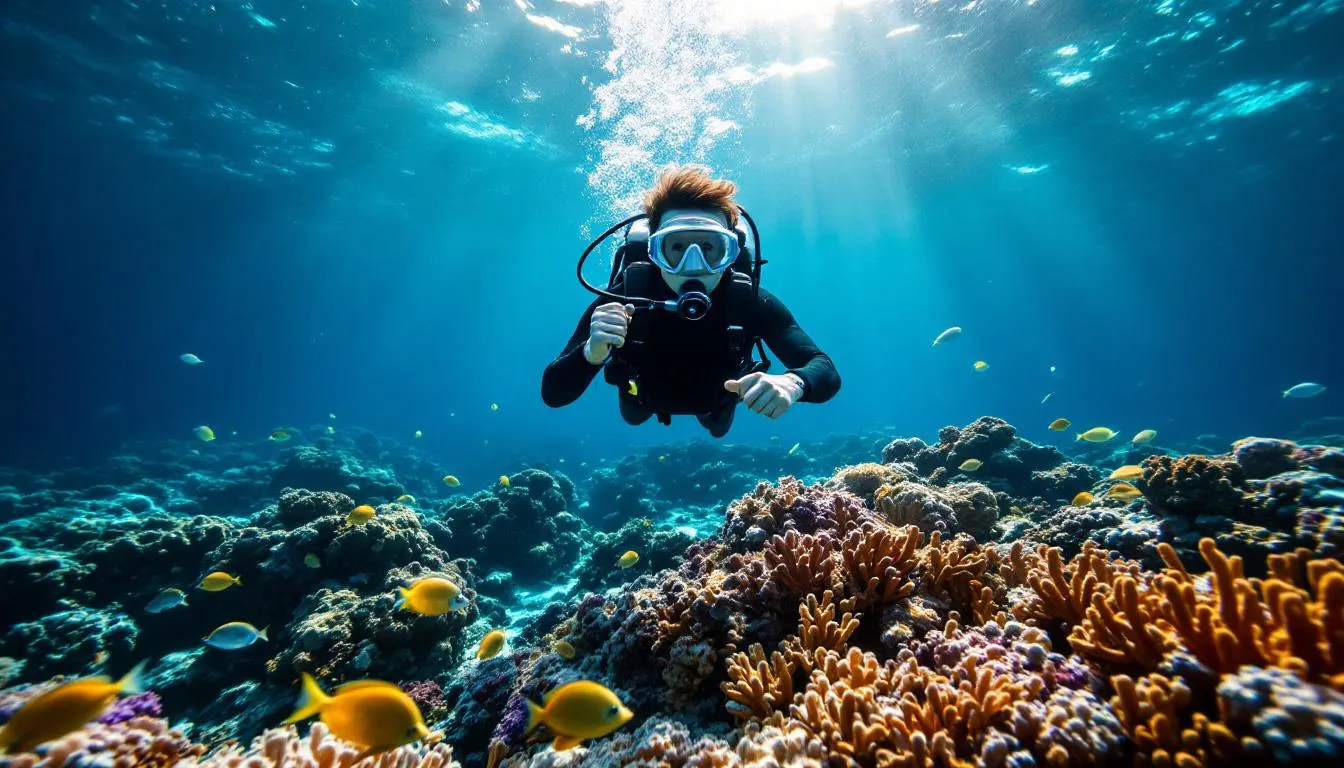
The benefits of mastering buoyancy control extend far beyond looking graceful underwater. Proper buoyancy control can improve your air consumption by up to 30%, allowing for longer, more enjoyable dives. When you’re not constantly fighting to maintain your position, your body relaxes, your breathing slows, and you conserve air naturally. This enhanced efficiency means more time exploring Sydney’s incredible underwater landscapes, from the vibrant marine life at Shelly Beach to the dramatic walls at The Gap.
Safety represents another crucial aspect of good buoyancy control. Uncontrolled ascents pose serious risks, including decompression sickness and arterial gas embolism. When you maintain neutral buoyancy, you can stop at any desired depth, perform safety stops correctly, and avoid rapid ascents that could prove dangerous. Similarly, proper buoyancy control prevents you from crashing into the bottom during descents, protecting both yourself and the marine environment.
The environmental benefits of perfect buoyancy cannot be overstated. Research shows that divers with poor buoyancy control can damage up to six square meters of coral reef in a single dive through accidental contact. By maintaining proper control, you become a responsible ocean ambassador, protecting the delicate ecosystems that make Sydney’s diving so spectacular. The vibrant marine life you encounter while diving depends on these pristine environments remaining undisturbed.
Finally, mastering buoyancy control transforms your entire diving experience. Instead of concentrating on staying off the bottom, you can focus on observing marine life, taking photographs, or simply enjoying the meditative quality of underwater exploration. Many divers describe achieving perfect buoyancy as the moment they truly fell in love with scuba diving.
Essential Equipment for Buoyancy Control
Understanding your equipment forms the foundation of effective buoyancy control. Each piece of gear affects your buoyancy characteristics differently, and knowing how they work together helps you make informed decisions about your setup.
Traditional buoyancy control devices come in two primary styles: jacket-style BCDs and back-inflate wing systems. Jacket BCDs wrap around your torso like a vest, providing buoyancy from multiple angles. While user-friendly for beginners, they can squeeze you as they inflate and may push you into a more upright position underwater. Wing-style BCDs position the air bladder behind you, maintaining a more horizontal trim but requiring better buoyancy skills to use effectively.
Your weight system plays an equally important role in buoyancy control. Integrated weight systems, built into modern BCDs, offer convenience and quick-release safety features. Traditional weight belts provide more flexibility in weight distribution but require careful fitting to prevent slippage. The key lies in proper weight distribution—typically 80% of your ballast weight on your belt or integrated system, with the remaining 20% distributed as trim weights to fine-tune your horizontal position.
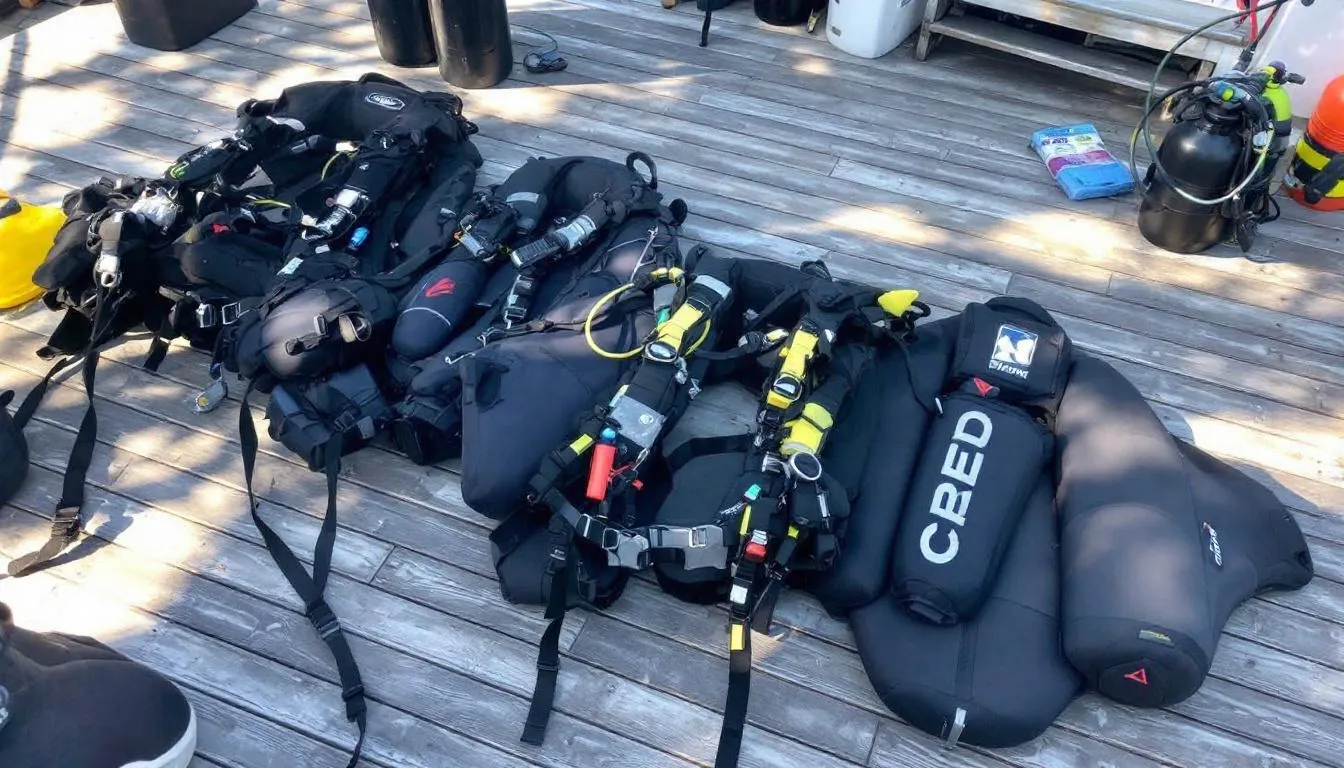
Exposure suits dramatically affect your buoyancy budget. A 5mm wetsuit, common for Sydney’s cooler waters, typically requires additional ballast weight equivalent to about 10% of your body weight to compensate for the neoprene’s inherent buoyancy. As you descend, water pressure compresses the neoprene, reducing its buoyancy and requiring BCD inflation to maintain neutral buoyancy. Crushed neoprene suits and drysuits behave differently, with much less inherent buoyancy change throughout your dive.
Tank material creates another variable in your buoyancy equation. Aluminium tanks become increasingly positively buoyant as you consume air, potentially requiring additional ballast weight at the beginning of your dive. Steel tanks typically provide negative buoyancy throughout the dive, often allowing you to carry 2-3 kilograms less ballast weight than with aluminium cylinders. Understanding these characteristics helps you adjust your target ballast weight requirements for different equipment combinations.
The revolutionary Avelo system represents a significant advancement in buoyancy control technology. Unlike traditional BCDs that use air-filled bladders, Avelo employs a rigid cylinder with a rechargeable, battery-powered water pump. This system maintains constant buoyancy by pumping water in or out of the cylinder, automatically compensating for gas consumption and ambient pressure changes. For new divers, this means fewer manual adjustments and more stable buoyancy throughout the dive.
Additional accessories can fine-tune your buoyancy setup. Ankle weights help divers who tend to go feet-first maintain horizontal trim. Trim pockets allow you to adjust weight distribution without completely redoing your ballast weight configuration. A neutrally buoyant mesh bag keeps your dive accessories from affecting your overall buoyancy status.
Mastering Your Weighting System
Proper weighting forms the cornerstone of all buoyancy skills. Too much weight forces you to constantly fight to stay off the bottom, while too little weight makes descending and maintaining depth nearly impossible. Finding your optimal weight requires a systematic approach and careful documentation.
The buoyancy check procedure should become second nature for every diver. At the surface in full scuba gear, including a nearly empty tank, you should float at eye level while holding a normal breath. When you exhale completely, you should slowly sink. This check ensures you can comfortably float during surface intervals while still being able to descend easily at the end of your dive when your tank is lighter.
For a more precise assessment, perform your buoyancy check at 5 meters depth with an empty BCD. At this depth, you should hang neutrally buoyant without any air in your BCD while breathing normally. If you sink slowly, remove weight. If you float upward, add weight. Make adjustments in small increments—typically 1-2 kilograms at a time—until you achieve perfect neutrality.
Starting weight calculations provide a baseline for your weighting system. In Sydney’s saltwater conditions with a 5mm wetsuit, begin with approximately 10% of your body weight in ballast. A 70-kilogram diver would start with about 7 kilograms of weight. This starting point requires adjustment based on individual body composition, with higher fat mass requiring more ballast weight due to fat’s natural buoyancy.
Water temperature affects your exposure suit’s thickness and, consequently, your buoyancy needs. Sydney’s water temperatures range from about 16°C in winter to 23°C in summer. Divers often use thicker exposure suits in winter, requiring additional ballast weight. Document your optimal weighting for different seasonal conditions to eliminate guesswork on future dives.
The difference between saltwater and freshwater diving requires careful attention. Salt water provides more buoyancy than fresh water, typically requiring 2-3 additional kilograms of ballast weight when transitioning from pool or lake diving to ocean diving around Sydney. This difference becomes particularly important for divers who train in swimming pools but primarily dive in marine environments.
Maintaining detailed records of your optimal weight combinations proves invaluable as you gain experience. Create a simple log noting your body weight, exposure suit type, tank material, water conditions, and resulting ballast weight requirements. Over time, these records eliminate the guesswork and help you achieve proper buoyancy control from the moment you enter the water.
Weight distribution significantly impacts your underwater trim and stability. Placing too much weight on your weight belt can cause feet-first descents, while inadequate weighting forces you into an upright position underwater. Distribute weight to maintain horizontal trim—your ideal position for efficient movement and reduced air consumption. Some divers benefit from moving small amounts of weight to tank bands or BCD trim pockets to achieve perfect balance.
Core Buoyancy Control Techniques
Mastering buoyancy control requires developing proficiency with two primary tools: your buoyancy control device and your breathing. Used together skillfully, these tools provide precise control over your position in the water column.
BCD Inflation and Deflation Mastery
Your BCD serves as the primary tool for gross buoyancy adjustments, particularly when changing depths or compensating for exposure suit compression. Effective BCD use relies on making small, frequent adjustments rather than large air additions that can lead to rapid buoyancy changes.
During descent, add small amounts of air to your BCD as you feel the squeeze from increasing pressure. Don’t wait until you’re negatively buoyant and sinking rapidly—anticipate the need for air and add it gradually. A good rule of thumb involves adding a short burst of air every 3-5 meters during descent, adjusting based on how quickly your exposure suit compresses.
Ascent management requires even more attention to detail. As ambient pressure decreases, any air in your BCD expands, creating increasing positive buoyancy. Begin venting air early and often during ascent to prevent runaway positive buoyancy. Start with small amounts—a brief press of the deflate button every few meters—and increase venting frequency as you approach the surface, where air expansion accelerates.
The “roller coaster” effect plagues many new divers who make large BCD adjustments. Adding too much air creates rapid ascent, leading to panic and excessive air dumping, which causes rapid descent. Breaking this cycle requires patience and small adjustments. When in doubt, add or remove less air than you think you need—you can always make additional small adjustments.
Emergency deflation techniques become crucial in situations where you need rapid negative buoyancy. Practice locating and using all deflation methods on your BCD: the primary inflator deflate button, shoulder dump valves, and any additional dump valves. In emergency situations, lifting the entire inflator hose above your head while pressing the deflate button provides maximum air removal efficiency.
Breath Control as Fine-Tuning
While your BCD handles major buoyancy changes, breath control provides precise fine-tuning within a 1-2 pound range. Your lung volume directly affects your buoyancy—full lungs increase your volume and buoyancy, while empty lungs decrease both.
Controlled breathing patterns help maintain stable buoyancy during normal diving activities. Slow, deep breaths provide better gas exchange while creating gentle buoyancy oscillations that feel natural underwater. Rapid, shallow breathing not only increases air consumption but creates erratic buoyancy changes that make depth control difficult.
Use breath holds strategically for precise positioning, but never exceed safe limits. A slightly deeper breath can help you rise gently to examine something above you, while a controlled exhale can help you sink slightly for a closer look. Limit breath holds to 10-15 seconds maximum to avoid hypoxia risks, and always return to normal breathing patterns promptly.

Relaxation techniques significantly impact your breathing and, consequently, your buoyancy control. Anxiety and task loading cause rapid breathing, increased air consumption, and erratic buoyancy. Focus on slow, rhythmic breathing patterns even when dealing with challenging underwater situations. Many instructors teach new divers to count their breaths—inhale for four counts, hold briefly, exhale for four counts—to establish calming breathing rhythms.
Practice breath control exercises during surface intervals to improve your underwater skills. Try floating motionless at the surface using only breathing adjustments to rise and sink slightly. This practice builds awareness of how lung volume affects buoyancy and develops the subtle control needed for precise underwater positioning.
Troubleshooting Common Buoyancy Problems
Even experienced divers occasionally encounter buoyancy challenges. Recognising and correcting these issues quickly prevents frustration and potential safety concerns.
Overweighting represents the most common buoyancy problem among new divers. Symptoms include difficulty maintaining neutral buoyancy despite a full BCD, constant struggle to stay off the bottom, and excessive fatigue from fighting against negative buoyancy. If you find yourself swimming upward constantly or unable to hover without significant BCD inflation, you’re likely carrying too much weight. Remove weight incrementally during your surface interval and retest your buoyancy.
Underweighting creates opposite problems but can be equally frustrating. Signs include inability to descend easily, floating to the surface despite an empty BCD, and difficulty performing safety stops. Underweighted divers often exhaust themselves trying to swim downward against their natural buoyancy. If you struggle to descend or maintain depth, add weight gradually until you achieve neutral buoyancy at 5 meters with an empty BCD.
Trim issues manifest as uncontrolled feet-first or head-first orientations underwater. Poor weight distribution typically causes these problems rather than incorrect total weight. Feet-first descents often result from too much weight concentrated on the weight belt, while head-heavy trim might indicate weight positioned too high on your body. Redistribute weight using trim pockets, ankle weights, or tank band weights to achieve horizontal positioning.
Depth-related buoyancy changes become more pronounced during deeper dives. As you descend beyond 20 meters, exposure suit compression significantly reduces buoyancy, requiring larger BCD adjustments. Anticipate these changes and add air to your BCD proactively. During ascent from deep dives, begin venting air early and dump larger volumes as you approach shallow depths where air expansion accelerates.
Equipment-related problems can create unexpected buoyancy issues. Trapped air in your BCD, particularly in the kidney dump area of jacket-style BCDs, can prevent proper air removal. Learn to position yourself to facilitate complete air evacuation from all areas of your BCD. Regulator free-flows can add unexpected air to your system—in these situations, focus on controlled ascent while managing the excess air input.
Psychological factors significantly impact buoyancy control. Anxiety causes rapid breathing, increased air consumption, and poor decision-making regarding buoyancy adjustments. Task loading—concentrating intensely on other skills or problems—often leads to neglecting buoyancy control. Practice mindfulness underwater, regularly checking your depth and buoyancy status even when focused on other activities.
Environmental conditions can challenge even skilled divers’ buoyancy control. Strong currents may require slight negative buoyancy to maintain position, while surge in shallow water demands constant minor adjustments. Sydney’s diverse diving conditions, from the protected bays to more exposed ocean sites, provide excellent opportunities to practice buoyancy control in varying conditions.
The Avelo System Advantage for New Divers
The Avelo system represents a revolutionary approach to buoyancy control that addresses many challenges faced by new divers. By replacing traditional air-filled BCDs with a rigid, water-ballasted system, Avelo simplifies buoyancy control while providing more stable, predictable performance.
Traditional BCDs rely on air compression and expansion as you change depth, requiring constant manual adjustments to maintain neutral buoyancy. The Avelo system uses a rigid cylinder that maintains constant volume regardless of depth. A rechargeable, battery-powered pump adds or removes water from this cylinder to maintain perfect buoyancy throughout your dive.
For new divers, this technology eliminates many common buoyancy control complications. Instead of learning to anticipate air expansion during ascent or compression during descent, Avelo users experience consistent buoyancy that automatically compensates for gas consumption and depth changes. This simplification allows new divers to focus on other essential skills while building confidence underwater.
Weight requirements change dramatically with the Avelo system. Traditional weighting aims to achieve neutral buoyancy with a nearly empty tank at the end of the dive. Avelo weighting targets neutral buoyancy from the beginning of the dive, with the system automatically compensating for the 2-3 kilograms of weight loss as you consume air from your tank. This approach often requires 3-5 kilograms less total weight than traditional systems.
The enhanced safety features of Avelo include automatic buoyancy compensation that reduces the risk of uncontrolled ascents or descents. The system continuously monitors and adjusts your buoyancy status, preventing the “roller coaster” effect that troubles many new divers using traditional BCDs. Emergency procedures remain straightforward—manual water dump capabilities provide immediate negative buoyancy if needed.

Avelo training at Abyss Scuba Diving in Sydney provides new divers with access to this cutting-edge technology. Instructors report that students using Avelo systems often achieve confident buoyancy control in half the time required with traditional equipment. The simplified operation allows instructors to focus on other essential skills while students develop natural buoyancy awareness.
Reduced task loading represents another significant advantage for new divers. Instead of constantly monitoring and adjusting BCD inflation, Avelo users can concentrate on navigation, marine life observation, or underwater photography. This mental bandwidth reduction proves particularly valuable during training dives when students juggle multiple new skills simultaneously.
The transition from traditional systems to Avelo typically requires only one or two familiarisation dives. Experienced divers might initially feel unusual about the constant neutral buoyancy, having adapted to the slight buoyancy oscillations of traditional BCDs. However, most divers quickly appreciate the enhanced control and reduced workload that Avelo provides.
Practical Drills for Your Next Shore Dive
Developing excellent buoyancy control requires dedicated practice with specific exercises designed to improve your skills progressively. Shore diving locations around Sydney provide ideal environments for practising these fundamental techniques in controlled conditions.
Hovering practice forms the foundation of all advanced buoyancy skills. Start in shallow water, 3-5 meters deep, where you can easily surface if needed. Achieve neutral buoyancy and attempt to remain completely motionless for 30-second intervals. Focus on using only your breathing for minor depth adjustments—resist the urge to use your hands or make BCD adjustments for small movements. Gradually increase your hovering time to two minutes as your skills improve.
The fin pivot drill teaches precise breath control while maintaining a reference point. Find a sandy bottom in 4-5 meters of water and kneel with your fin tips touching the bottom. Slowly inflate your BCD until you’re nearly neutral, then use only breathing adjustments to pivot around your fin tips. Inhale deeply to rise forward, exhale to sink back. This drill develops the subtle breath control needed for precise underwater positioning.
Controlled ascent and descent practice builds muscle memory for safe depth changes. Start at 8-10 meters and practice ascending at exactly one meter per minute—the recommended rate for safety stops and controlled ascents. Use your depth gauge to monitor progress and make BCD adjustments to maintain the proper rate. This drill proves invaluable for developing the patience and control needed for safe diving.
Breathing control exercises focus specifically on lung volume effects on buoyancy. At neutral buoyancy, practice rising and sinking 1-2 feet using only changes in lung volume. Take a slightly deeper breath to rise gently, exhale more completely to descend. Never hold your breath for extended periods—maintain continuous breathing while varying the volume slightly.
Navigation while maintaining depth challenges your buoyancy skills while performing other tasks. Set up a simple underwater course using natural features or dive weights, then navigate the course while maintaining constant depth at 8 meters. This exercise simulates real diving conditions where you must maintain buoyancy control while concentrating on other activities.
Sydney offers several excellent shore diving locations for buoyancy practice. Bare Island at La Perouse provides protected conditions with sandy bottom areas ideal for fin pivot exercises and hovering practice. The maximum depth of 12-15 meters allows for safe skill development while providing interesting marine life to observe between exercises.
Shelly Beach in Manly offers another excellent practice location with its calm conditions and gradually sloping bottom. The protected bay environment minimizes current and surge, allowing you to focus entirely on buoyancy skills. The diverse marine life provides natural motivation to practice approaching subjects carefully without disturbing them.
Gordon’s Bay near Clovelly presents slightly more challenging conditions for intermediate practice. The rocky bottom and occasional slight current require more precise buoyancy control, helping bridge the gap between basic skills and real-world diving conditions. Practice your hovering drills here once you’ve mastered them in easier conditions.
Plan your practice sessions with specific goals and time limits. Dedicate 15-20 minutes of each shore dive to focused buoyancy drills before enjoying the remainder of your dive for exploration. This structured approach ensures steady progress while maintaining the fun aspects of diving that keep you motivated.
Document your progress to maintain motivation and identify areas needing improvement. Note which drills feel comfortable, which require more work, and how long you can maintain stable hovering. Many divers find that consistent practice shows rapid improvement in the first few sessions, with steady refinement continuing over many dives.
Environmental Benefits of Perfect Buoyancy
Mastering buoyancy control transforms you into a responsible ocean ambassador, protecting the delicate marine environments that make Sydney’s diving so spectacular. The connection between buoyancy skills and environmental protection extends far beyond avoiding accidental contact with marine life.
Coral reef protection represents the most visible benefit of good buoyancy control. Research conducted by marine conservation organisations shows that a single diver with poor buoyancy control can damage up to six square meters of coral reef in one dive. Accidental fin kicks, gear contact, and stirred sediment can break fragile coral formations that took decades to develop. By maintaining perfect buoyancy, you ensure that future generations of divers can enjoy these same pristine environments.
Sediment disturbance reduction protects both marine habitats and dive visibility for everyone. When divers crash into sandy or muddy bottoms, the resulting sediment clouds can persist for hours, degrading visibility and affecting marine life behavior. Suspended sediment also settles on coral formations, potentially smothering the delicate polyps that keep reefs healthy. Your precise buoyancy control maintains crystal-clear visibility while protecting bottom-dwelling organisms from disruption.

Wildlife interaction improves dramatically when you achieve neutrally buoyant positioning. Marine animals typically flee from divers who create noise, vibration, or sudden movements caused by poor buoyancy control. When you hover motionlessly, marine life often approaches closer, providing incredible observation opportunities. Fish, rays, and even shy creatures like octopi become more comfortable around divers who move gracefully through their environment.
Photography and videography capabilities expand exponentially with perfect buoyancy control. Stable positioning allows for sharp, well-composed images without the camera shake that plagues divers still learning buoyancy skills. You can approach subjects slowly and carefully, capturing natural behaviours rather than flight responses. Many underwater photography courses list advanced buoyancy control as a prerequisite for exactly this reason.
Sydney’s unique marine environment deserves special protection due to its incredible biodiversity. From the colourful nudibranchs at Bare Island to the Grey Nurse Sharks at Magic Point, our local waters host species found nowhere else in the world. Your commitment to excellent buoyancy control helps preserve these environments for future generations while supporting sustainable diving tourism that benefits the entire Sydney diving community.
The responsibility as ocean ambassadors extends beyond your own diving practices. When you demonstrate perfect buoyancy control, you inspire other divers to improve their skills. Leading by example creates a culture of environmental responsibility that ripples through the diving community. Many experienced divers report that witnessing graceful, controlled divers motivated them to improve their own buoyancy skills.
Protecting local species requires understanding their specific vulnerabilities. Sydney’s underwater environments host delicate sponge gardens, slow-growing kelp forests, and ancient rock formations that recover slowly from damage. Your precise buoyancy control ensures that marine life continues thriving in the face of increasing diving pressure on popular sites.
Conservation organisations worldwide recognise excellent buoyancy control as one of the most effective interventions for reducing diver impact on marine ecosystems. Training programs that emphasise buoyancy skills show measurably reduced environmental impact compared to those focusing solely on other diving skills. Your investment in buoyancy mastery directly contributes to marine conservation efforts.
The cumulative effect of many environmentally conscious divers creates lasting positive change. When entire diving communities prioritize perfect buoyancy control, popular dive sites maintain their pristine conditions despite heavy use. This collective responsibility ensures that Sydney’s incredible diving opportunities remain available for decades to come.
Taking Your Skills to the Next Level
Once you’ve developed basic buoyancy control competency, advancing to the expert level requires structured training and continued practice. The PADI Peak Performance Buoyancy (PPB) course provides the perfect framework for refining your skills under expert instruction.
The Peak Performance Buoyancy course addresses the subtle aspects of buoyancy control that separate competent divers from truly skilled practitioners. Unlike basic certification courses that cover buoyancy as one of many skills, PPB focuses exclusively on achieving perfect buoyancy in all diving situations. Students practice advanced techniques, including pinpoint buoyancy control, effortless hovering, and maintaining stability while performing complex tasks underwater.
The course curriculum includes fine-tuning your weighting system for optimal performance across different equipment configurations. You’ll learn to calculate precise ballast weight requirements for various exposure suits, tank types, and diving conditions. The course also covers advanced weight distribution techniques using trim pockets and positioning to achieve perfect horizontal trim in all situations.
Breath control training reaches sophisticated levels in PPB courses, teaching students to make precise buoyancy adjustments within a half-breath range. Students learn to use breathing patterns strategically for photography, marine life observation, and complex underwater tasks. The course emphasises relaxation techniques that improve air consumption while enhancing buoyancy control precision.
Advanced techniques introduced in PPB courses include back-kicking for precise positioning without disturbing the environment, helicopter turns for rotating in place without forward movement, and modified flutter kicks that provide propulsion without affecting buoyancy. These skills prove invaluable for underwater photography, marine life observation, and technical diving preparation.
Specialty course preparation benefits significantly from excellent buoyancy control. Underwater photography courses require stable positioning for sharp images, wreck diving demands precise navigation through confined spaces, and deep diving intensifies buoyancy challenges due to exposure suit compression. PPB course graduates consistently perform better in advanced specialty training.
Instructor guidance at Abyss Scuba Diving Sydney provides personalised attention to your specific buoyancy challenges. Experienced instructors identify individual issues that might not be apparent to you, offering targeted solutions and practice techniques. This professional assessment often reveals simple adjustments that dramatically improve performance.
Personalised coaching addresses the unique physical and psychological factors that affect your buoyancy control. Instructors help optimise your equipment configuration, fine-tune your weighting system, and develop breathing techniques suited to your physiology. This individualised approach accelerates skill development while building lasting confidence.
The supportive learning environment at Abyss Scuba Diving emphasises gradual skill building without pressure. Students progress at their own pace while receiving encouragement and expert guidance. Many divers report that professional instruction gave them the confidence to attempt advanced diving activities they previously considered beyond their abilities.
Course scheduling accommodates Sydney divers’ varying schedules with multiple weekly sessions and flexible timing. Weekend intensive options suit busy professionals, while weekday sessions provide more relaxed learning environments. Small class sizes ensure individual attention while maintaining cost-effective training.
Investment in professional buoyancy training pays dividends throughout your diving career. Improved air consumption extends dive times, enhanced environmental awareness makes diving more enjoyable, and increased confidence opens doors to advanced diving opportunities. Many divers describe PPB training as the turning point when diving transformed from challenging to effortless.
Ongoing practice recommendations help maintain and improve your skills beyond formal training. Instructors provide specific drills tailored to your skill level and diving goals. Regular check-ups with professional instructors ensure that bad habits don’t develop while supporting continued improvement.
Frequently Asked Questions
How long does it typically take to master buoyancy control as a new diver?
Most new divers achieve basic buoyancy competency within 10-15 dives, but true mastery develops over 50-100 dives with focused practice. The timeline varies significantly based on individual learning styles, physical fitness, comfort level in water, and quality of initial instruction. Divers who dedicate time to specific buoyancy drills during their early diving experience typically progress faster than those who simply accumulate dive time without focused practice. Professional instruction through courses like Peak Performance Buoyancy can accelerate this timeline by providing structured skill development and expert feedback.
Can I practice buoyancy control skills in a swimming pool?
While swimming pools offer limited buoyancy control practice opportunities, they can be valuable for developing basic breath control awareness and equipment familiarity. Pool sessions work well for practising BCD inflation and deflation procedures, emergency weight dropping techniques, and basic hovering in shallow water. However, pools cannot replicate the depth-related pressure changes, exposure suit compression effects, or real-world conditions that significantly impact buoyancy control. Most effective buoyancy training occurs in open water environments where you experience actual diving conditions.
What’s the difference between weighting for cold water diving in Sydney versus tropical diving?
Sydney’s cooler water temperatures typically require thicker exposure suits, significantly increasing ballast weight requirements compared to tropical diving. A 5mm wetsuit commonly used in Sydney adds approximately 10% of your body weight in buoyancy, while tropical diving might only require a 3mm suit or rash guard. This difference often means carrying 3-5 additional kilograms of weight for Sydney diving. Additionally, Sydney’s saltwater provides more buoyancy than freshwater, requiring further weight adjustments for divers transitioning from inland training locations.
How does the Avelo system compare in cost to traditional BCD setups?
Avelo systems typically cost 2-3 times more than quality traditional BCD setups initially, with rental units priced at premium rates compared to standard BCDs. However, many divers find the enhanced buoyancy control and reduced learning curve justify the additional expense, particularly for frequent diving or advanced underwater activities like photography. Rental options at facilities like Abyss Scuba Diving allow divers to experience Avelo benefits without the full purchase investment, while some diving centres offer package deals that make the technology more accessible for new divers.
Should I adjust my weights if I’ve gained or lost weight since certification?
Yes, significant body weight changes typically require ballast weight adjustments, though the relationship isn’t always proportional. Changes in fat mass affect buoyancy more than muscle mass changes, since fat tissue provides more buoyancy than muscle tissue. Generally, every 5-10 pounds of weight change may require 1-2 kilograms of ballast weight adjustment, but individual body composition variations make professional assessment advisable. Perform new buoyancy checks whenever your body weight changes significantly, and consider factors like fitness level changes that might affect lung capacity and breathing patterns underwater.

 Trusted by Sydney divers