
Great Barrier Reef - 7 Natural Wonders of the World
Peter Letts Oct 20, 2022
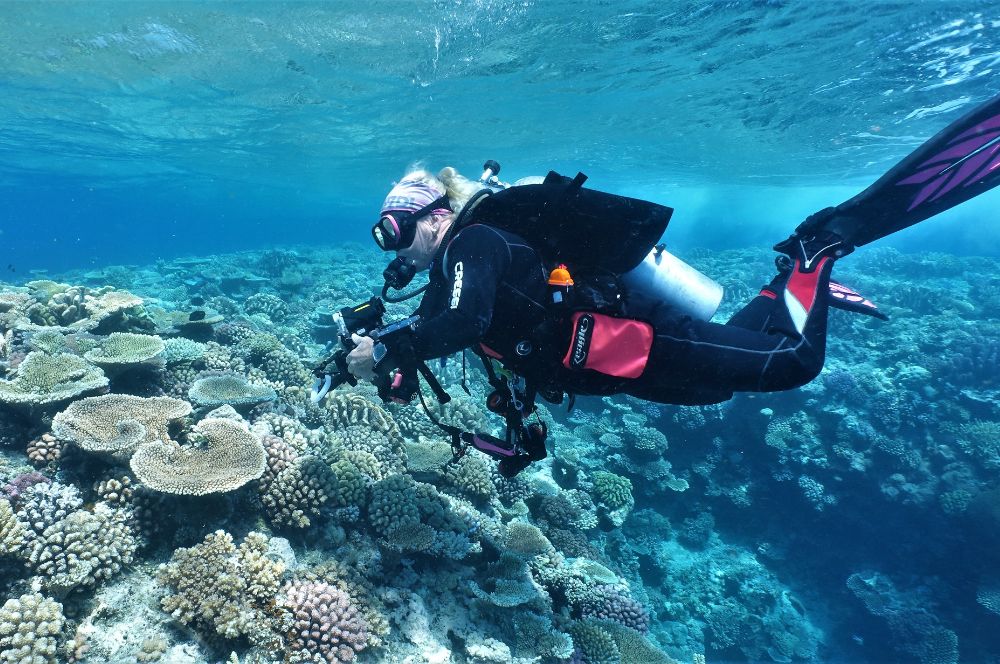
Updated 25 August 2026
The Great Barrier Reef in 2026: Still a Living Natural Wonder
The latest science shows a vast reef beginning to recover in many places—while still facing serious, climate-driven pressure.
Yes—the Great Barrier Reef is alive, World Heritage-listed and still an extraordinary place to dive. It is also under genuine pressure. Across an ecosystem stretching more than 2,300 kilometres, neither “the Reef is dead” nor “the Reef is fine” tells the whole story.
Conditions vary between regions, reefs and even individual sites. Some have high coral cover and spectacular marine life; others are recovering from bleaching, cyclones, floods or crown-of-thorns starfish. The honest picture is more complex—and more interesting—than a headline.
The Great Barrier Reef at a glance
- World Heritage
- Listed in 1981
- Marine Park area
- 344,400 km²
- Length
- More than 2,300 km
- Reef systems
- About 3,000 individual reefs
- Islands and cays
- 600 continental islands and 300 coral cays
- Known fish species
- More than 1,500
- Coral diversity
- More than 450 hard-coral species
- Greatest long-term threat
- Climate change
Why the Great Barrier Reef remains a natural wonder
The Great Barrier Reef is widely described as one of the Seven Natural Wonders of the World. That phrase is a popular recognition rather than a formal UNESCO title; UNESCO inscribed the Reef on the World Heritage List in 1981 under all four natural heritage criteria.
The Marine Park contains roughly 3,000 reefs, 600 continental islands, 300 coral cays and around 150 inshore mangrove islands. Its habitats extend from shallow coastal seagrass and mangroves to mid-shelf reefs, outer reefs and deep oceanic waters.
This scale supports exceptional biodiversity, including more than 1,500 fish species, thousands of molluscs and hundreds of hard and soft corals. It is also Sea Country for more than 70 Traditional Owner groups, whose connections, knowledge and custodianship long predate the Marine Park and World Heritage listing.
The Great Barrier Reef is not dead, and its outstanding universal value remains intact. It is also not untouched or guaranteed a secure future. Its natural beauty endures, while repeated heat stress and other pressures make recovery windows increasingly important.
What the latest 2026 coral-cover survey found
The Australian Institute of Marine Science surveyed 121 reefs between August 2025 and June 2026. Hard coral cover increased in the north, increased modestly in the central region and remained broadly stable in the south.
Across the 121 reefs, 56% showed no net change in coral cover, 28% increased and 16% declined. AIMS describes this as the beginning of recovery from the 2024 mass bleaching event. Substantial declines were uncommon during the 2025–26 surveys, helped by a late-summer monsoon that reduced heat stress.
That is encouraging, but hard coral cover is only one measure of reef condition. It does not, by itself, describe coral diversity, colony age, disease, fish communities or the balance between fast-growing and disturbance-sensitive species. AIMS also recorded above-average sea temperatures, a regional bleaching event in the north, cyclone impacts and an emerging fifth wave of crown-of-thorns starfish outbreaks.
Coral bleaching is not automatic death—but it is a serious warning
When heat or another stress causes coral to expel the microscopic algae living in its tissues, the coral becomes pale or white. A bleached coral is still alive at first and can recover if conditions improve. Severe or prolonged stress, however, can cause disease, reduced reproduction and coral mortality.
AIMS records eight mass bleaching events on the Great Barrier Reef: 1998, 2002, 2016, 2017, 2020, 2022, 2024 and 2025. The 2024 event had the largest spatial footprint recorded on the Reef; the 2025 event was less extensive but created the second pair of consecutive events after 2016–17. During summer 2025–26, bleaching was generally low across the Reef, although a regional event was declared in the northern management region.
The Reef remains World Heritage-listed. UNESCO's 2026 decision nevertheless expressed utmost concern about the effects of the 2024 and 2025 bleaching events—another reason to distinguish formal heritage status from ecological condition.
This is why a single photograph, tourist report or region-wide coral-cover percentage cannot describe every reef. The latest evidence supports two statements at once: many reefs remain vibrant and capable of recovery, and climate change is still the Reef's greatest long-term threat.
What Dr Terry Cummins' Cairns diver survey found
Dr Cummins' doctoral research examined the long-term sustainability of recreational scuba-diving tourism in the Cairns section of the Marine Park. In late 2018, 533 returning dive tourists completed questionnaires; around three-quarters had previously dived coral reefs, giving them experience against which to compare Cairns.
The study also reported that 83% intended to return to dive Cairns and 87% would recommend Cairns to others. Eighty-eight per cent agreed or strongly agreed that Cairns was a safe place to dive because of its diving regulations.
Important context: these figures describe the perceptions of an English-language survey group in late 2018. They are not a reef-wide ecological assessment and should not be used as a substitute for AIMS or Reef Authority monitoring in 2026.
Read the CQUniversity thesis record or our practical guide to diving the reefs from Cairns.
Do Queensland regulations limit dives to 20 metres or 45 minutes?
No. Queensland's current recreational-diving rules do not impose a blanket 20-metre depth limit or a universal 45-minute dive-time limit on certified divers.
The 2024 Queensland Code of Practice uses training, experience and risk as the basis for depth. An operator may still set a shorter maximum time or shallower depth for a particular trip because of conditions, gas planning, site layout, supervision or the vessel schedule. That is an operating decision, not a statewide 45-minute law.
| Diver or activity | Current Queensland guidance |
|---|---|
| Non-certified introductory diver | Maximum 12 metres under the operator's supervision. |
| Entry-level diver in training | Maximum 18 metres; children aged 10–11 are limited to 12 metres. |
| Certified recreational diver | Should remain within the depth for which they are trained and experienced. |
| Recreational technical diving | Recognised by the Code, with additional requirements for mixed gases, decompression, planning, equipment and competency. |
The Code advises that recreational diving workers using compressed air should not be required to dive deeper than 40 metres. It also warns certified divers that assistance beyond 40 metres may place a worker at unacceptable risk. Properly trained technical divers can undertake deeper or planned-decompression diving when the Code's additional safeguards are met.
Always follow the operator's briefing, your certification limits, your gas plan and your dive computer. Read the official Queensland Recreational Diving Code of Practice 2024 for the complete requirements.
How to plan a rewarding Great Barrier Reef dive
The Reef is vast, so choose the experience rather than treating it as one uniform destination. A day boat can suit a short Cairns stay, while a liveaboard gives certified divers more water time and access to a broader range of reefs, including dawn and night diving where offered.
- Ask which reef section and sites the operator expects to visit, while recognising weather can change the plan.
- Check the number and expected duration of dives, guiding arrangements and any operator depth limits.
- Choose an itinerary that matches your certification, recent experience and interests.
- Never touch or stand on coral, secure gauges and alternate air sources, and maintain careful buoyancy.
- Use current AIMS and Reef Authority updates for a regional picture—not social-media headlines alone.
For a more immersive itinerary, compare our Great Barrier Reef liveaboard options from Cairns and read why a liveaboard suits many reef divers.

See the Reef for yourself
The Great Barrier Reef remains a world-class diving destination. Choose an itinerary that matches your experience, then let current conditions and a responsible operator determine the best sites.
Great Barrier Reef FAQs
Is the Great Barrier Reef dead?
No. It remains a vast, living ecosystem with many reefs supporting substantial coral cover and marine life. Its condition varies widely, and repeated heat stress, cyclones, poor water quality and crown-of-thorns starfish continue to affect parts of the system.
Is the Great Barrier Reef still one of the Seven Natural Wonders?
It continues to be widely described as one of the Seven Natural Wonders of the World, including by the Reef Authority. This is a popular designation rather than an official UNESCO category. Its formal international status is a UNESCO World Heritage property, listed in 1981 under all four natural criteria.
Does coral bleaching mean the coral is dead?
Not immediately. Bleached coral is stressed but still alive and may recover if temperatures fall soon enough. Severe or prolonged bleaching can cause disease and death, so the duration and intensity of heat stress matter.
Is there a 20-metre or 45-minute legal limit for Queensland dives?
No blanket limit applies to certified divers. They should stay within their training and experience, and operators may impose site-specific limits. The 2024 Code recommends maximums of 12 metres for introductory divers and 18 metres for entry-level students.
Can technical divers go deeper than 40 metres in Queensland?
Yes, when appropriately trained and when the operator meets the Code's technical-diving requirements. These include competency, dive planning, decompression procedures, suitable gases, redundant equipment and surface support.
Is a liveaboard better than a day trip?
It depends on your time and goals. Day trips are convenient; liveaboards generally provide more dives and access to a wider selection of sites. Compare the itinerary, operator policies and your own experience rather than choosing by dive count alone.
Sources and further reading
Reef condition, scale, safety rules and author details checked 25 August 2026:
- AIMS: Annual Summary Report of Coral Reef Condition 2025–26
- AIMS: documented coral bleaching events
- Reef Authority: Great Barrier Reef facts
- Reef Authority: Great Barrier Reef Outlook Report 2024
- UNESCO World Heritage Centre: Great Barrier Reef
- UNESCO 2026 World Heritage Committee decision
- WorkSafe Queensland: diving and snorkelling laws
- CQUniversity: Dr Cummins' doctoral thesis record
- Dive Queensland: Dr Terry Cummins profile
- PADI: Terry Cummins' executive career and OAM

 Trusted by Sydney divers