
The Science Behind Sapphire Seas | Why the Ocean Is Blue
Peter Letts Jun 12, 2024
Ocean science for divers
Why Is the Ocean Blue? The Science Behind Sapphire Seas
Water filters sunlight wavelength by wavelength. What remains—and what returns to our eyes—creates the blues, greens and turquoise tones we see above and below the surface.
The short answer
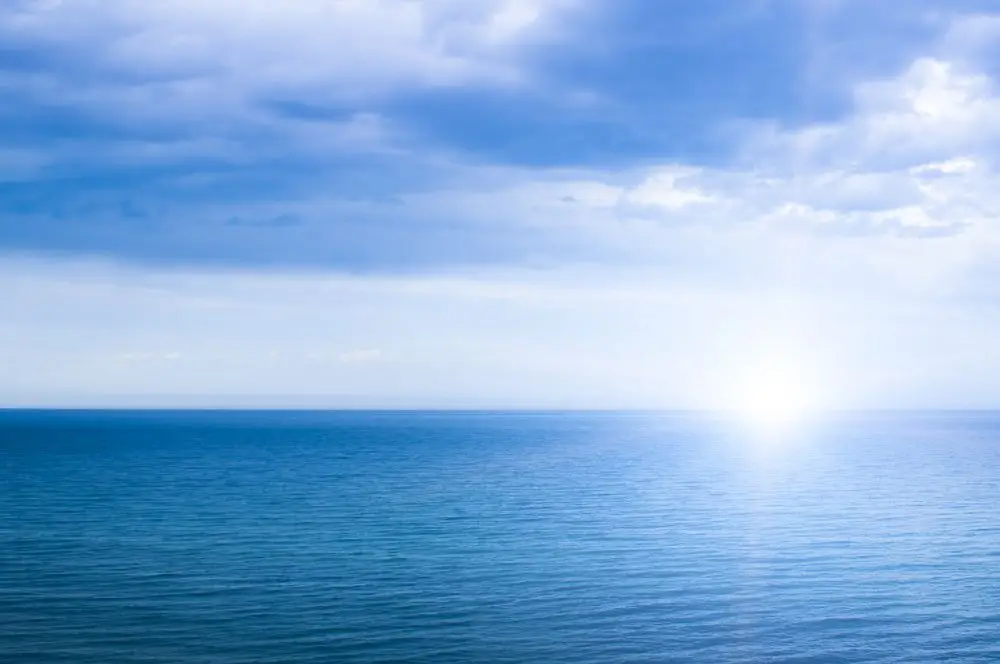
The ocean usually looks blue because water absorbs the longer red, orange and yellow wavelengths of sunlight more strongly than blue wavelengths. Some of the remaining blue light is scattered and returned towards the surface, so a large volume of clear water appears blue. Reflection from the sky can change the surface appearance, but it is not the main cause of the ocean’s blue colour.
Pure water is faintly blue. The effect is difficult to notice in a glass because light travels only a short distance through it, but it becomes obvious across a deep body of water.
Ocean colour is not a pigment or structural-colour illusion. It results from wavelength-dependent absorption and scattering by water and the materials within it.
Green, turquoise, brown or reddish water is not automatically “good” or “bad”. Colour can be shaped by depth, seabed reflection, phytoplankton, sediment and dissolved organic matter.
What actually makes clear ocean water blue?
Sunlight may look white, but it contains a range of visible wavelengths. Once that light enters the sea, it can be absorbed, scattered or transmitted. Water does not treat every wavelength equally: the red end of the visible spectrum is absorbed more readily, while blue light travels farther through clear water.
Sunlight enters the sea
Some light reflects from the surface, while the rest enters the water column and begins interacting with water molecules and anything suspended or dissolved there.
Longer wavelengths fade first
Water preferentially absorbs reds, oranges and yellows. With increasing path length, the light remaining in clear water becomes progressively weighted towards blue.
Blue light returns to your eye
A small portion of the remaining light is scattered back out of the water. That water-leaving light is what produces the familiar blue appearance.
This is why saying that the sea is “just reflecting the sky” is incomplete. The surface does reflect skylight, clouds, sunrise and sunset—particularly at glancing viewing angles—but the optical properties of the water itself still determine the underlying colour of deep, clear water.
Important correction: particles do not simply “enhance the blue”. Different particles absorb and scatter different wavelengths. Plankton, sediment, dissolved material and even air bubbles can shift the apparent colour in very different directions.
Why colours fade and change with depth
Light weakens as it travels through water, and different colours disappear at different rates. Red light is lost relatively quickly; blue light usually penetrates deepest in clear open-ocean water. The exact rate depends on water clarity and composition, so fixed “colour disappears at exactly this depth” rules are only rough guides.
For divers, the effect is immediate and practical. A red fish, sponge or wetsuit may look brown, grey or nearly black under ambient light at depth because there is too little red light available to reflect. A torch or camera light restores the warm colour locally by supplying a fresh, nearby source of broad-spectrum light. This is one reason a good light can transform a night dive or reveal colour inside an overhang.
Very little significant sunlight remains below about 200 metres, although faint light may be detected deeper in exceptionally clear water. Below roughly 1,000 metres, the ocean is considered aphotic: sunlight does not penetrate, and visible illumination comes from artificial light or bioluminescent organisms.
Why the sea can look turquoise, green, brown, red or white
“Ocean colour” describes the spectrum of light leaving the water, not just a colour name chosen by eye. Water depth, the seabed and substances in the water column can all alter that spectrum.
Deep blue
Clear, deep water with relatively little suspended material tends to look blue because longer wavelengths are absorbed more strongly.
Turquoise
Shallow clear water over pale sand or carbonate seabed can return more light, producing bright cyan and turquoise tones.
Green
Chlorophyll in phytoplankton absorbs strongly in parts of the blue and red spectrum. A high concentration can shift water towards green, although sediment and dissolved matter can also contribute.
Brown or yellow
Suspended mineral sediment and coloured dissolved organic matter—often carried by rivers or runoff—can make coastal water look tan, tea-coloured or brown.
Red or orange
Some dense algal blooms discolour the surface, but not every harmful bloom is red and not every visible bloom is harmful. Colour alone cannot identify a health risk.
White
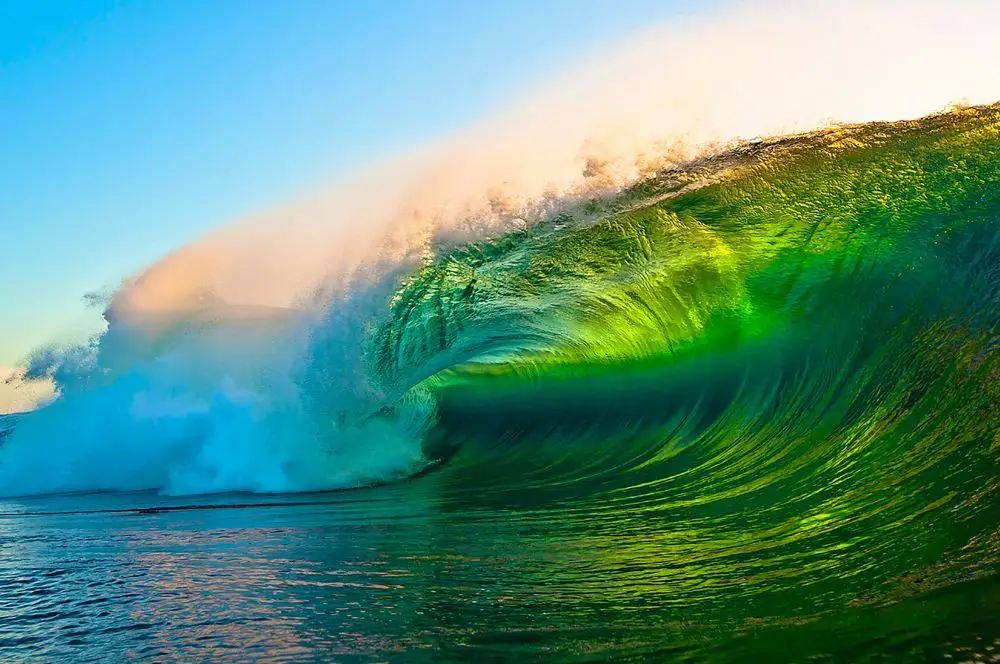
Breaking waves and foam contain many air–water boundaries that scatter visible wavelengths broadly, which is why whitecaps look pale or white.
Colour is a clue, not a verdict. Clear blue water is not automatically clean or healthy, and green or brown water is not automatically polluted. Water-quality advice, sampling and local conditions matter more than appearance alone.
How satellites read ocean colour
Ocean-colour satellites do more than take blue photographs. Their sensors measure water-leaving light across multiple wavelengths. Scientists correct for the much larger contribution from the atmosphere, then use the remaining spectral pattern to investigate chlorophyll, phytoplankton communities, suspended particles and coloured dissolved organic matter.
NASA’s PACE mission launched in February 2024. Its Ocean Color Instrument measures more than 200 wavelengths from the ultraviolet through the visible and into the near-infrared, giving researchers far more spectral detail than earlier multispectral sensors. That improves the ability to distinguish different optical signals and to monitor changes across the global surface ocean.

Is climate change changing the ocean’s colour?
Evidence shows broad, measurable change—but the interpretation needs care. A 2023 study of MODIS-Aqua observations from July 2002 to June 2022 found statistically significant ocean-colour trends across 40% of the global surface ocean. Low-latitude waters had, on the whole, shifted towards greener reflectance, and an ecosystem model produced a similar climate-change signal.
That does not mean 40% of the ocean visibly turned green, or that every greener area simply contains more chlorophyll. Ocean colour combines signals from the full surface ecosystem, and the causes and ecological consequences can differ by region. Long, well-calibrated records are essential for separating climate-driven trends from natural variability.
What ocean colour can—and cannot—tell a diver
From shore or a dive boat, colour can offer hints about suspended sediment, plankton, recent runoff, surface glare and seabed depth. It cannot reliably tell you the underwater visibility, current, pollution level or safety of a dive site. Those require current observations and a site-specific assessment.
For Sydney diving, check the latest dive conditions, read the individual trip listing and follow the instructor, Divemaster or skipper’s briefing. Once underwater, notice how the palette changes during descent—and how quickly a torch brings warm reef colours back into view.
Frequently asked questions
Why does the ocean look blue when water is clear?
A small amount of water looks clear because the light path is short. Across a large, deep volume, water absorbs longer red, orange and yellow wavelengths more strongly than blue, so the light returned to your eye is weighted towards blue.
Is the ocean blue because it reflects the sky?
Not mainly. The surface reflects some skylight and can mirror clouds, sunrise or sunset, but clear deep water is intrinsically blue because of its wavelength-dependent absorption and scattering.
Why does seawater sometimes look green?
Phytoplankton chlorophyll can shift water towards green, but sediment, coloured dissolved organic matter, depth and seabed reflection can also contribute. Green water does not have one universal cause.
Why do red colours disappear underwater?
Water absorbs red wavelengths relatively quickly. With less red light available, red objects reflect little colour and can look brown, grey or black until a nearby torch or camera light illuminates them.
Does a greener ocean always mean more phytoplankton?
No. Phytoplankton are often important, but ocean colour also responds to sediments, dissolved organic matter and changes within plankton communities. Scientists analyse a spectrum of wavelengths rather than equating one visible colour with one cause.
Can satellites measure ocean colour accurately?
Yes, with careful calibration and atmospheric correction. Satellite sensors measure spectral water-leaving light and can reveal broad patterns in chlorophyll, particles and dissolved material, although clouds, sun glint and optically complex coastal water make interpretation harder.
Is climate change altering ocean colour?
A 2023 study found significant colour trends across 40% of the global surface ocean during a 20-year MODIS-Aqua record, with low-latitude waters becoming greener overall. The trends indicate ecosystem change, but “greener” does not by itself mean more chlorophyll or a healthier ocean.
Sources and further reading
See the colour change for yourself
On a Sydney dive, warm colours fade as you descend and a torch reveals the reef’s colour again. Choose a marine-life dive that suits your experience and the day’s conditions.
Not certified yet? See how to start scuba diving in Sydney.

 Trusted by Sydney divers