
DIN vs Yoke: Which Scuba Regulator is Right for You?
Peter Letts Oct 27, 2024

Scuba gear guide
DIN vs Yoke: Which Scuba Regulator Connection Should You Choose?
The practical differences in security, pressure, travel compatibility and conversion—plus our recommendation for most divers buying today.
Updated 28 July 2026
The quick answer
For most Sydney divers buying a first stage now, DIN is the more flexible long-term choice. It screws directly into the cylinder valve, keeps its O-ring captured inside the connection and can work with a common yoke adapter when travelling. Choose yoke if you mainly use rental cylinders in places where that connection is standard and you value the fastest, most familiar setup. Both are safe when the equipment is compatible, correctly rated and properly maintained.
A regulator first stage reduces the very high pressure in your scuba cylinder to an intermediate pressure that the second stage can use. DIN and yoke do not describe how well a regulator breathes. They describe the physical connection between that first stage and the cylinder valve.
That distinction matters. The connection affects which tanks you can use, where the sealing O-ring sits, the working pressure available and what you may need to carry when travelling. It does not replace the need to compare regulator performance, environmental sealing, hose routing, service support and suitability for your diving style.
DIN vs Yoke at a glance
| Feature | DIN | Yoke / INT |
|---|---|---|
| How it attaches | Threaded fitting screws into the valve. | A clamp fits over the valve and is tightened with a screw. |
| O-ring position | Captured on the regulator first stage. | Exposed on the face of the tank valve. |
| Typical pressure rating | Available for 232 bar and 300 bar systems; confirm the exact rating. | Commonly rated to about 230/232 bar; confirm the manufacturer’s specification. |
| Profile | More compact and close to the cylinder valve. | Bulkier because the yoke fits around the valve. |
| Travel flexibility | Can usually be used on a compatible yoke tank with a rated DIN-to-yoke adapter. | Cannot be made DIN-compatible with the same simple travel adapter. |
| Often preferred by | Divers who want a secure connection, technical divers and those planning future equipment options. | Recreational divers using rental tanks where yoke is extremely common. |
How the two scuba regulator connections work

What is a DIN regulator?
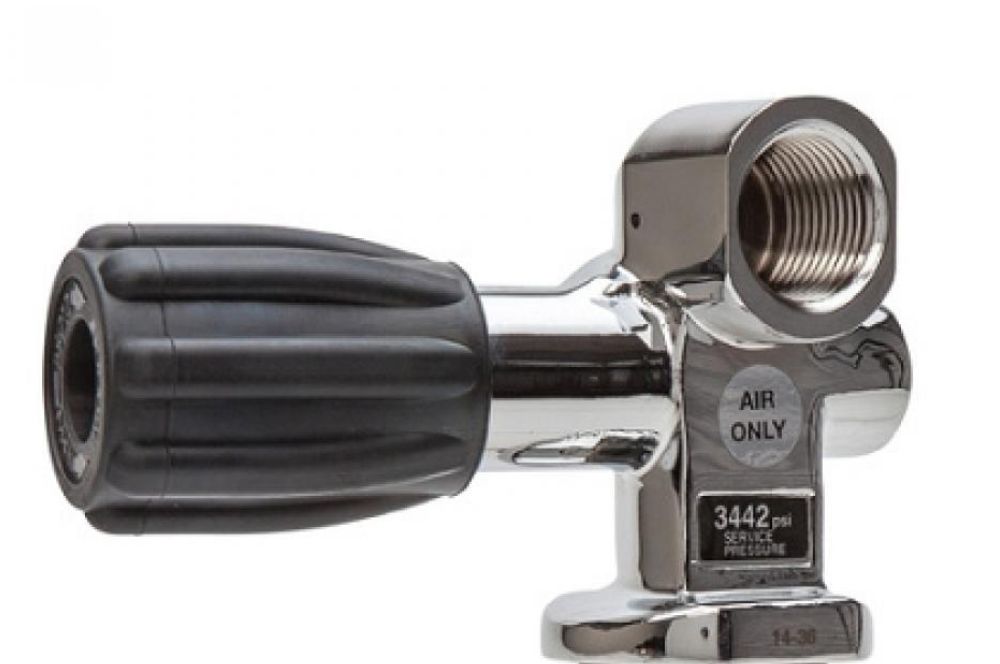
A DIN regulator has a threaded opening on its first stage. The male threaded fitting screws directly into a matching female DIN cylinder valve. As the handwheel is tightened, the regulator’s own O-ring is enclosed inside the DIN valve, creating a compact and secure connection.
DIN comes from a German standards tradition—Deutsches Institut für Normung—although modern diving connections are covered by international standards. You will encounter both 232 bar and 300 bar DIN systems. A 300 bar valve has a deeper thread and must be paired with a DIN regulator approved for that high pressure. Never assume that two threaded components are compatible for high pressure use simply because they look similar.
What is a yoke regulator?
A yoke regulator—also called an INT connection—uses a metal frame that sits over the tank valve. Turning the screw presses the first stage inlet against an O-ring on the yoke valve face. It is simple to recognise, quick to attach and familiar to many recreational divers.
In a yoke regulator setup, the cylinder supplies the sealing O-ring. Because this exposed O-ring can be nicked, displaced or worn, it should be checked before connection. A damaged ring may cause the familiar hiss of a leak when the yoke valve is opened. The correct response is to close the valve, depressurise the system and have the seal or equipment checked—not to keep tightening against a damaged component.

Advantages and trade-offs
Why many divers choose DIN
- Secure connection: the first stage screws into the valve rather than clamping around it.
- Protected seal: the O-ring is captured inside the fitting during use.
- High pressure capacity: suitable models can be used with 300 bar DIN tank valves and high-pressure cylinders.
- Compact profile: less hardware projects behind the diver’s head.
- Future-proof flexibility: commonly chosen for technical diving, twinsets and other demanding dives.
- Travel option: a small, correctly rated yoke adapter can cover many rental-tank situations.
Why some divers prefer yoke
- Familiar operation: the clamp and screw are straightforward for many beginners.
- Rental compatibility: yoke tanks remain common at many dive shops and resorts.
- No separate adapter: direct attachment where the destination’s cylinders already use yoke valves.
- Easy visual inspection: the valve face and exposed O-ring are obvious before setup.
- Proven recreational use: the yoke system is safe and reliable within its rated pressure when maintained correctly.
Cold-water clarification: DIN is often seen on regulators used in cold water and extreme conditions, but the connection alone does not prevent freezing or free flow. Look for a first stage and second stage specifically designed and approved for the expected water temperature. Environmental sealing, heat-transfer design and the manufacturer’s limits matter.
Should you buy DIN or yoke?
There is no universal winner, but there is a practical answer for most buyers. Start with the cylinders you will actually use, then allow for where your diving may go next.
Mostly local diving with your own equipment
DIN is usually the better long-term option if your cylinders or regular operator provide compatible DIN valves.
Frequent resort travel and rental tanks
Check destinations before buying. DIN plus a yoke adapter offers broad flexibility without assuming every valve will accept it.
Technical or overhead environments
DIN is the usual direction because of its secure, compact fitting and compatibility with common technical-diving configurations.
Existing yoke equipment that suits your diving
There is no need to replace a sound setup merely for the label. Consider conversion when your cylinders, travel or future plans justify it.
Our usual recommendation: if you are purchasing a new, serviceable regulator for Sydney diving and want maximum flexibility, choose a DIN regulator and carry the manufacturer-approved yoke adapter when travelling. Before buying, confirm the exact first-stage pressure rating, cylinder-valve type and destination compatibility with your local dive shop.
Travel, adapters and convertible tank valves
Using a DIN regulator with a yoke tank
A rated DIN-to-yoke adapter clamps to a yoke cylinder valve and provides a threaded socket for a compatible DIN regulator. This is the common travel solution. The adapter adds some length and weight behind your head, so install it carefully and check that the connection is clean, undamaged and fully seated before exposing it to high pressure.

Using a yoke regulator with a DIN tank
The reverse is not solved by attaching the same external adapter. Some 232 bar convertible valves contain a removable insert: fitted, the yoke valve accepts the clamp; removed, the DIN valve accepts a compatible DIN regulator. If a true DIN cylinder valve has no suitable insert, a yoke first stage cannot simply clamp onto it.

A yoke first stage can sometimes be converted to a DIN system using a model-specific manufacturer conversion kit. That is workshop work for an authorised regulator technician, not a do-it-yourself travel change. Parts, torque settings, pressure ratings and testing must match the exact model.
Before an overseas trip: ask the operator which cylinder valves and working pressures they supply. Carry the correct adapter, protect the threads, and do not force a connection that feels stuck or begins cross-threading. If in doubt, let the dive centre check the setup.
Connection care and maintenance
Good maintenance matters more than the name stamped on the connection. Before each dive, check that the first stage regulator inlet and cylinder valve are clean, undamaged and dry. Inspect the visible yoke O-ring, or the captured O-ring and threads on a DIN regulator, before attaching anything.
Thread a DIN regulator in by hand, keeping it square to the DIN valve. Stop if it feels rough or begins cross-threading. Fit a yoke regulator evenly over the yoke valve and tighten the screw only enough to make a secure seal; excessive force does not repair a damaged O-ring.
After diving, replace the dust cap correctly and rinse the equipment as its manufacturer directs, without allowing water into the first stage. Follow the specified regulator service and maintenance schedule, and have leaks, damaged threads, persistent corrosion or difficult handwheels assessed by an authorised technician. Valve maintenance and first-stage conversion are not improvised dive-site repairs.
The connection is only one part of choosing a regulator
DIN or yoke matters, but it should not distract from the features that affect breathing performance, reliability and ownership. Compare the complete system, not only the inlet fitting.
- Breathing performance: how the first stage and second stage perform at the depths, pressures and workloads for which they are approved.
- Balanced design: whether delivery remains consistent as cylinder pressure changes.
- Environmental protection: suitability for cold water, silty conditions or other demanding environments.
- Port layout: enough high- and low-pressure ports for your gauge, computer transmitter, alternate air source, BCD and drysuit where relevant.
- Local servicing: access to trained technicians, genuine parts, warranty support and a clear maintenance schedule.
- Future plans: travel, deep or technical training, alternate cylinder configurations and the scuba diving gear you may add later.
If you want a fuller checklist, read our guide to choosing the right scuba regulator. It helps you compare performance, servicing and fit before narrowing the choice to a connection type.
Choose a regulator that fits the diving you will actually do
Browse Abyss’s current range online, or speak with the Ramsgate team about cylinder compatibility, DIN and yoke options, servicing and a setup that makes sense for Sydney diving and travel.
DIN and yoke FAQs
What is the main difference between DIN and yoke?
DIN screws into a threaded cylinder valve and carries its O-ring inside the connection. Yoke uses a clamp around the valve and seals against an O-ring exposed on the valve face. This changes compatibility, profile and available high pressure ratings, but not the basic purpose of the regulator.
Is DIN safer than yoke?
Both systems are safe when compatible, within their rated pressure, correctly assembled and maintained. DIN has practical safety advantages: a secure threaded connection and a captured O-ring. That does not make a poorly maintained or incorrectly connected DIN setup safe.
Can I use a DIN regulator on a yoke tank?
Usually, yes—with a correctly rated DIN-to-yoke adapter and compatible equipment. Confirm the valve, regulator and adapter ratings, and expect the adapter to make the first stage project slightly farther from the tank.
Can I use a yoke regulator on a DIN tank?
Only if the cylinder has a compatible 232 bar convertible valve with the correct yoke insert fitted. A yoke regulator cannot simply clamp onto a DIN-only or 300 bar valve. Check with the dive operator or an equipment technician.
Can a yoke regulator be converted to DIN?
Some models can be converted with a manufacturer-approved DIN conversion kit installed and tested by an authorised technician. This is different from using a simple external travel adapter. Not every model is convertible.
Do I need DIN for technical diving?
DIN is strongly preferred and often specified for technical-diving configurations because it is compact, threaded and available for higher-pressure systems. Exact equipment requirements depend on your course, team, gases, cylinders and planned environment.
Should a travelling recreational diver choose DIN or yoke?
DIN plus a suitable yoke adapter is often the most versatile personal setup. However, check with each operator before travel because equipment standards and cylinder valves vary around the world. A direct yoke setup may still be convenient if nearly all your diving uses yoke rental tanks.

 Trusted by Sydney divers