

Build sound foundations
Learn preparation, recovery breathing, equalisation, streamlined movement and appropriate progression from a qualified freediving instructor.
 ☀ Make a Splash This Summer — Get Free Freediving Fins (Valued at $140!)
Experience the freedom of diving on a single breath—no bubbles, no tanks, just a calm, quiet connection with the ocean. The PADI Freediver Course is your gateway to the underwater world, where confidence and control take you farther with every dive. Learn more about freediving in Sydney.
As part of our limited-time summer promo, when you enrol by October 30, you’ll receive a FREE pair of premium long-blade freediving fins (valued at $140). Perfectly tuned for comfort and propulsion, they’re yours to keep—and built to help you dive deeper with ease.
Availability: In Stock
PADI Freediver course • Sydney
Build the knowledge, water skills and buddy procedures needed for recreational breath-hold diving. Complete PADI eLearning, develop static and dynamic apnea skills in confined water, then apply free-immersion and constant-weight techniques during two instructor-supervised ocean sessions.
One breath, structured training
Freediving combines relaxation, efficient movement, equalisation and an understanding of how the body responds to breath-hold and pressure. The PADI Freediver course introduces those foundations through knowledge development, confined-water practice and supervised open-water training.
Just as importantly, you will learn how to supervise a buddy, recognise when help is needed and respond to a loss of motor control or blackout. These are core freediving skills, not optional extras.
A calm way to explore
Formal training gives you a framework for developing technique without treating depth or breath-hold time as a competition.
Learn preparation, recovery breathing, equalisation, streamlined movement and appropriate progression from a qualified freediving instructor.
Develop direct-supervision, surface-support and rescue skills instead of relying on casual observation from a distant swimmer.
Use a mask, snorkel, fins and suitable exposure protection to experience the underwater environment quietly on a single breath.
Technique, awareness and rescue
Develop the knowledge and practical skills used before, during and after a recreational freedive.
Learn how oxygen, carbon dioxide, pressure and the body’s responses affect comfort, awareness and risk during freediving.
Practise relaxed preparation and effective recovery breathing without using deliberate hyperventilation to suppress the urge to breathe.
Develop an equalisation method suited to head-down descents and learn to stop the descent rather than force equalisation.
Practise breath-hold while stationary at the surface and while swimming horizontally in confined water under direct supervision.
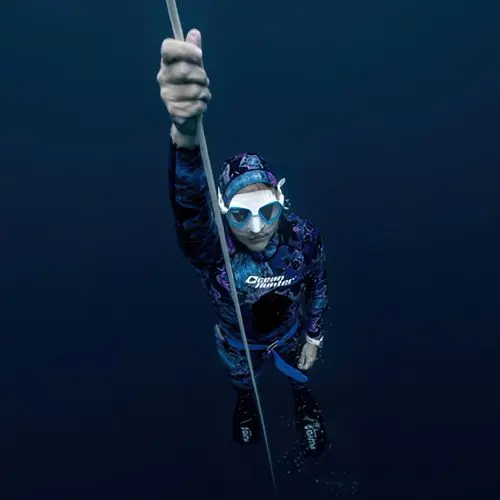
Use the training line to pull down and up while maintaining equalisation, body position and controlled movement.
Practise duck dives, finning, alignment and turns while descending and ascending without changing the weight carried.
Use one-up, one-down procedures, meet an ascending diver at the appropriate point and remain attentive through the surface-recovery period.
Recognise a loss of motor control or blackout and practise the prescribed surface and underwater rescue procedures.
Course structure
Complete the knowledge development before the practical weekend so your instructor can focus the in-water sessions on technique, safety and performance requirements.
Allow approximately four to six hours for physiology, equipment, techniques, safety rules and buddy procedures. Study time varies by student.
Complete the required swim, then develop preparation, static apnea, dynamic apnea, recovery breathing, buddy supervision and basic rescue skills.
Practise line orientation, equalisation, free immersion, constant weight, buddy procedures and open-water rescue under instructor supervision.
Performance and conditions matter: the course is normally scheduled across two practical days, but certification is based on meeting the required knowledge and water-skill objectives. Timing, site and training activities may change with weather, ocean conditions, facility access, student readiness and instructor judgement.
Before you enrol
You do not need a scuba or previous freediving certification, but you must meet the age, swimming, medical and course-performance requirements.
Abyss currently requires students to be at least 15 years old for the full PADI Freediver course. Ask about PADI Basic Freediver options for ages 12–14.
Be comfortable in the water and able to complete the required continuous surface swim without a time limit.
Complete the required participant medical questionnaire. Obtain written medical clearance when the questionnaire directs it.
Complete either 200 metres continuously without swim aids or 300 metres continuously using a mask, fins and snorkel. The swim is not timed.
Tell your instructor before the course if you are uncertain about this requirement or need to discuss an adaptive technique.
Certification is earned
In addition to knowledge, safety and rescue skills, the full certification includes measurable confined- and open-water objectives. These are completed under direct supervision; they are not goals to attempt alone.
Demonstrate a breath-hold of at least 90 seconds while stationary under the required direct supervision.
Swim at least 25 metres horizontally on a single breath in confined water using the required procedures.
Demonstrate constant-weight freediving to at least 10 metres. PADI Freediver training covers the 10–16 metre range, subject to course standards, conditions and instructor limits.
Attendance alone does not guarantee certification. If an objective is not completed during the scheduled course, your instructor will explain the appropriate training or completion options.
Training and equipment
Confirm equipment before booking: tell Abyss which items you own so suitable rentals can be arranged. Confirm the inclusions for your selected date, sizing, hire costs and any active equipment promotion before paying.
Freediving safety
Use a trained buddy who directly supervises each performance: one diver breath-holds while the other remains ready to assist. Continue close observation during the critical recovery period after surfacing.
Do not hyperventilate—whether through fast, deep or deliberately manipulated breathing—before a breath-hold. Lowering carbon dioxide can delay the urge to breathe while oxygen falls, raising the risk of an unexpected loss of motor control or blackout. Follow the preparation, recovery and surface-interval procedures taught by your instructor.
Required before training
Every prospective student must complete the required medical questionnaire before participating. If an answer indicates that medical review is required, obtain written clearance from an appropriate physician before training.
Do not conceal a condition or medication. Tell Abyss if your health changes after completing the form. Participants under 18 also need the required parent or guardian signatures.
Before you book
No previous scuba, snorkelling or freediving certification is required. You must meet the age, swimming, medical and course-performance requirements.
No previous breath-hold training is required. You will learn preparation and recovery techniques during the course, but the full certification has performance requirements that must be completed under supervision.
Abyss currently lists age 15 as the minimum for this full course. Ask the team whether the confined-water PADI Basic Freediver option is suitable and available for a younger student.
Current course information includes use of a weight belt and weights during training. Bring a suitable mask, snorkel, wetsuit and freediving fins, or arrange any needed rentals with Abyss before the course. Equipment packages and promotions can change.
Certification is based on successfully completing the required knowledge, safety and in-water objectives. Your instructor will explain any further training or completion options; additional sessions may be required.
No. Always freedive with a suitably trained, attentive buddy who directly supervises the dive and is capable of performing the required rescue procedures.
The site, timing or date may change when weather or water conditions are unsuitable. Your instructor makes the final decision based on safety, student readiness and the course objectives.
The current advertised course price is $599. Confirm the current price, inclusions, equipment costs, booking terms and any active promotion before paying.
Choose an available date, review the medical questionnaire and confirm the equipment supplied for your course. Complete the eLearning before the confined-water and ocean sessions.

 Trusted by Sydney divers