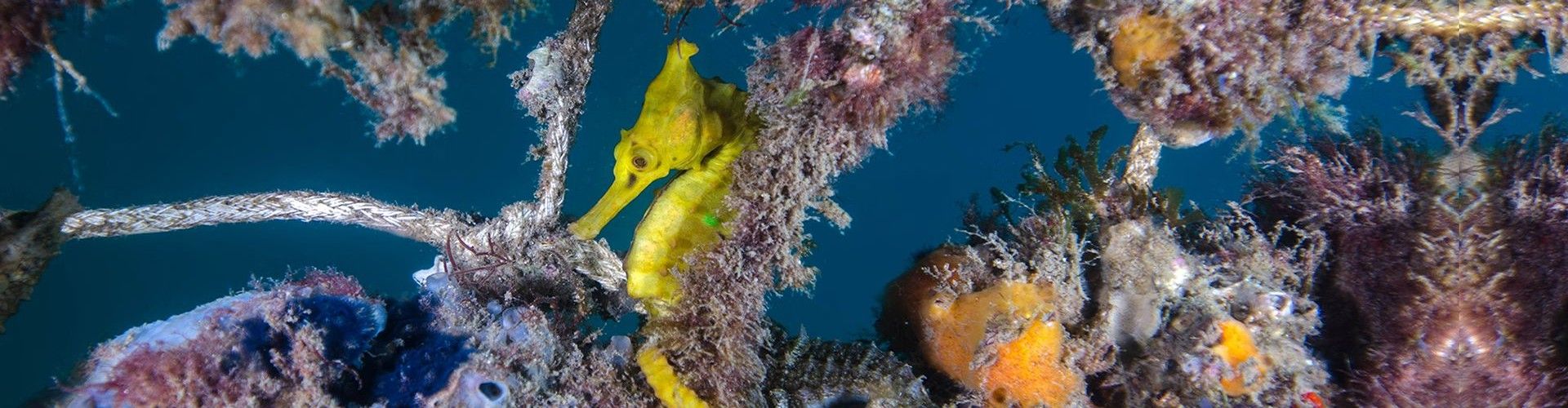
Yellow seahorse sheltering among encrusted marine growth at Lilli Pilli

Port Hacking · Southern Sydney

Lilli Pilli Baths Dive Site

A sheltered Port Hacking shore dive where patient divers search the swimming enclosure, rocky ledges and moorings for seahorses, cuttlefish, octopus and small marine life.

Open Water routes to 18 m maximum · Sheltered shore access · Nearshore map 5–14 m

Lilli Pilli diving

A slow, sheltered macro dive in Port Hacking

Lilli Pilli Baths is very different from Sydney’s exposed ocean sites. The interest is concentrated around the netted tidal baths, shallow rocky ledges, moorings and silty sand, where small animals can reward a diver who moves slowly and looks closely. Its long association with seahorses makes it especially attractive to macro photographers, although every wildlife sighting is wild and unguaranteed.

The sheltered setting does not guarantee clear water or an easy dive. The best experience comes from good tide timing, precise buoyancy and a conservative route—not from trying to cover the greatest distance or reach the maximum depth.

Quick planning guide

Lilli Pilli Baths at a glance

Location
Lilli Pilli Point Reserve, 46R North East Crescent, Lilli Pilli
Dive style
Slow out-and-back shore dive around the baths, ledges and mooring area
Depth
The historical nearshore map labels contours from about 5–14 m; deeper extensions vary by route
Experience
Open Water routes must remain within 18 m; deeper plans require appropriate training and experience
Entry and exit
Inspect current signage and use a clearly permitted entry suitable for scuba equipment
Bottom
Rock ledge, soft silt and sand; excellent trim and gentle finning are essential
Timing
Visibility is often better around high water; confirm actual tide, flow, rain and visibility
Possible marine life
Seahorses, schooling fish, leatherjackets, octopus, cuttlefish and wobbegongs

Underwater orientation

Use the baths, ledge and moorings as orientation—not as a fixed circuit

This is general orientation for qualified divers, not a bearing-by-bearing plan. Access, moorings and bottom features can change, so agree on route, depth, turn pressure and ascent area from a current briefing and observed conditions.

  1. Inspect access and water use before gearing up

    Check the shoreline, potential water access, slippery surfaces, water level, fishing activity and small-craft movements. Follow current signs and use only a clearly permitted entry suitable for scuba equipment.

  2. Settle in the shallows before reaching the silt

    The bottom drops from very shallow water to around 5–6 m near the inshore ledge. Confirm weighting, trim, flag management and buddy position before moving over the fine sand and silt, where one careless fin kick can remove the visibility for the whole team.

  3. Towards the netted baths

    Following the nearshore ledge towards the swimming enclosure brings the team to net, rock and encrusting habitat where seahorses and small fish may be found. Stay outside the bathing enclosure, keep clear of swimmers and never hold or pull on the net.

  4. Away from the baths towards ledges and moorings

    The opposite direction follows ledges and scattered boulders towards jetties and moorings. Wobbegongs may rest beneath overhangs, while octopus and cuttlefish can blend into the reef. Keep clear of chains, ropes, hulls and fishing lines.

  5. Return before the easy part becomes difficult

    Depth increases away from shore, but a deeper profile is not required to enjoy the site. Turn early enough to navigate back in declining visibility, avoid a mid-mooring ascent, complete the planned safety stop and surface with the agreed reserve near the inspected exit.

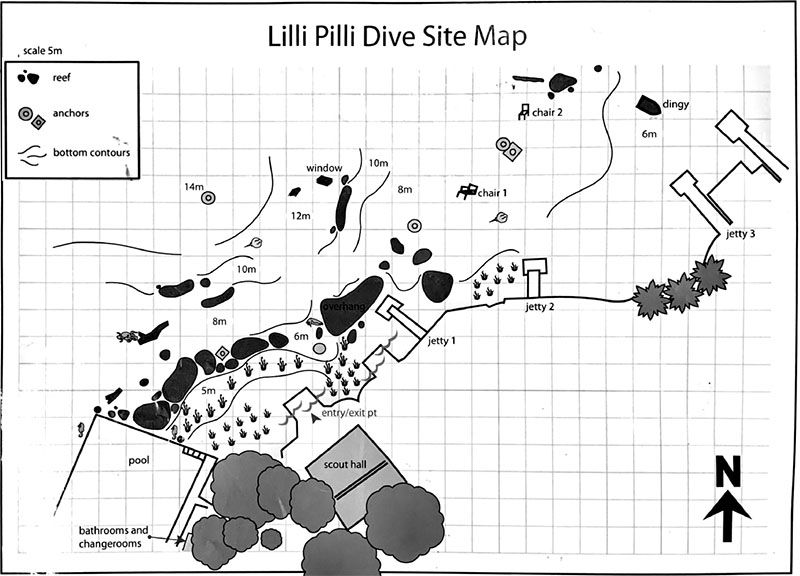
Indicative Lilli Pilli dive site map showing the baths, Scout Hall, entry area, jetties, reef, moorings and depth contours
Indicative planning aid only. The map shows a historical nearshore layout and marked entry, but it does not grant access to the Scout Hall ramp. Moorings, access and bottom features can change, and the drawing does not show the complete deeper profile. Open the full-size map.

Towards the baths

Net habitat and small marine life

The enclosure edge rewards a slow search of growth on and around the net, nearby ledges and sand. Seahorses, small leatherjackets and schooling fish may occur, but sightings and abundance vary. Excellent buoyancy matters more than distance.

Towards the moorings

Ledges, overhangs and camouflage experts

Rocky edges and scattered structure provide shelter for wobbegongs, octopus and cuttlefish. Treat every mooring line, chain and jetty as an entanglement or overhead hazard and do not surface beneath a vessel or structure.

Deeper extension

Twenty-two metres is a possible maximum—not the default dive

The historical Abyss guide records a maximum around 22 m, while the supplied map covers only the shallower 5–14 m area. Open Water divers must remain within their certification and planned limits; deeper extensions call for appropriate training, experience, gas and navigation.

Entry, exit and access

Confirm a public, controlled route into—and out of—the water

Use a clearly permitted entry

Inspect current signage and select an entry suitable for scuba equipment without obstructing swimmers, anglers or small craft. Access arrangements around neighbouring facilities can change, so do not assume that the Scout Hall ramp is available without permission.

Expect slippery and sharp surfaces

Inspect the route before carrying cylinders down. Algae, oysters, urchins, uneven edges and changing tide height can alter the safest entry technique. Wear sturdy boots, use a controlled method appropriate to the selected access and current briefing, and assist the buddy team without blocking bath or jetty users.

Keep the ascent nearshore and positively located

Agree on the final approach before descending and avoid surfacing in the open mooring area, under a wharf or beside a moving boat. In an emergency, make the safest controlled ascent available and use appropriate surface signalling; a normal dive plan should never depend on a blind offshore ascent.

Freedivers standing in sheltered water at Lilli Pilli with a boat nearby
Lilli Pilli can look calm while remaining a shared waterway. Watch for boats, fishing activity, swimmers and small craft throughout the dive.

Important: This page does not grant access across private or controlled land. Current signs, closures and the site owner’s directions always take precedence.

Port Hacking marine life

Move slowly and let the small animals come into view

Lilli Pilli is a search dive, not a wildlife guarantee. A torch and careful observation help reveal animals against net growth, ledges, weed and silt. Keep fins, gauges and camera equipment clear of the bottom and never touch or reposition an animal.

Seahorses around artificial habitat

Lilli Pilli has a long association with seahorses using the swimming-net structure and nearby growth. White’s seahorse is Endangered in NSW and occurs in Port Hacking, but species identification and sightings should never be assumed. Read the NSW Government conservation update.

Leatherjackets and schooling fish

Small leatherjackets can disappear against growth on the net and reef, while schools of fish move through the enclosure edge and around the jetties. Stay clear of bath users and let fish settle rather than chasing them.

Wobbegongs beneath the ledges

Wobbegongs may shelter under rock overhangs. Approach slowly, keep clear of the head and tail, do not block the animal’s route and never reach into a dark ledge without first checking what is resting there.

Octopus and cuttlefish camouflage

Octopus may advertise a den with a scatter of shells, while cuttlefish blend with weed and rock. Look for texture and movement, give the animal room and leave shells and den material exactly where they are.

For a wildlife-focused outing, check the Sydney dive calendar. The exact shore site is chosen for the day’s conditions. Maintain neutral buoyancy, use a low-impact fin technique and never touch, chase, feed or reposition wildlife for a photograph.

Conditions and safety

High water may improve visibility—but rainfall can undo the advantage

When Lilli Pilli can work well

  • High water or a manageable incoming phase is bringing cleaner water into the site.
  • The actual flow is light and compatible with the planned out-and-back route.
  • Recent rain has not produced a Beachwatch warning or poor estuary conditions.
  • Fishing and small-craft activity leaves a safe, clearly understood route.
  • Visibility, depth and access suit every diver in the team.

When to change the plan

  • It is raining heavily, within up to three days of heavy rain, or a current water-quality warning applies.
  • Strong westerly wind, chop or boat wash compromises the entry or exit.
  • Visibility is too poor to hold buddy contact and navigate reliably.
  • Fishing lines, hooks, moving boats or bath users crowd the intended route.
  • Access is closed, unclear or cannot be used without obstructing others.

Lilli Pilli is generally sheltered from open-ocean swell, but it is not protected from every condition. Westerly wind can create chop and passing vessels create wash. Beachwatch advises avoiding estuaries during and for up to three days after heavy rain, even if the live forecast has not yet changed. Check the tide and local dive report, then make the final decision at the site.

Before entering

A practical Lilli Pilli safety check

Agree on route, maximum depth and ascent area

Choose the bath or mooring-side route, certification-appropriate maximum depth, return gas and nearshore ascent before entering. Do not rely on finding the exit after visibility has deteriorated.

Use a visible dive flag and signalling equipment

Display or tow a clearly visible Alpha dive flag suited to the plan, stay close to it and carry surface-signalling equipment. NSW rules require powered vessels to keep clear, but a flag does not remove collision risk. Review the current NSW safe-distance rules.

Carry an accessible line cutter

Fishing line, hooks, netting, mooring ropes and chains are foreseeable entanglement hazards. Each diver should be able to reach a cutting tool with either hand and keep hoses and gauges secured.

Protect visibility with trim and gentle finning

Stay horizontal above the bottom, keep fins high and use small frog kicks or another low-impact technique. If the silt is disturbed, stop, regain buddy contact and navigate conservatively.

Keep clear of boats, wharves and swimmers

Never surface beneath a vessel or structure. Keep planned scuba activity outside the netted enclosure, do not obstruct swimmers or users of the jetty and pontoon, and maintain a proper lookout whenever the team is at the surface.

Protect seahorses and their habitat

Do not hold the net, kneel beside an animal or move weed, shells or growth for a photograph. Give every seahorse room, limit crowding and secure all equipment before approaching habitat.

Important: This page provides general orientation, not training or a live site briefing. Each diver remains responsible for current conditions, certification limits, equipment, gas, navigation and the decision to enter.

Location and facilities

Getting to Lilli Pilli Baths

Official address and facilities

Sutherland Shire Council lists Lilli Pilli Baths at 46R North East Crescent, Lilli Pilli. The netted tidal baths sit within Lilli Pilli Point Reserve, with designated parking, toilets, a changing shed, outdoor shower and bubbler. The baths are not patrolled.

Expect a genuinely shared waterfront

The jetty and floating pontoon support fishing and small-craft loading. Keep cylinders, mats and loose equipment away from paths, bath access and the jetty; respect swimmers, anglers and boat users; and take every item of rubbish and line away.

Frequently asked questions

Lilli Pilli Baths dive site FAQs

How deep is Lilli Pilli Baths?

The supplied site map shows much of the inshore terrain between about 5 and 14 metres, while the historical Abyss guide records a maximum around 22 metres on longer offshore extensions. Depth is part of the planned route, not a target. Stay within certification, experience, gas and computer limits.

What certification and experience do I need?

Open Water or equivalent certification can cover a suitable route that remains within the 18 m Open Water limit. Certification alone is not enough: divers also need recent experience, stable buoyancy over silt, low-visibility navigation, buddy skills and confidence managing a dive flag around a shared waterway.

What tide is best for Lilli Pilli?

Visibility is often better around high water, and many divers favour slack high water or a manageable incoming phase. That is not a guarantee: actual flow, recent rain, wind, boat traffic and water quality still decide whether the dive is suitable.

Will I see a seahorse?

Lilli Pilli has a long association with seahorses around the swimming net and nearby growth, and White’s seahorse occurs in Port Hacking. Numbers and sightings vary, so no encounter can be guaranteed. Search slowly without touching the net, habitat or animal.

Is Lilli Pilli good for underwater photography?

It can be an excellent macro-photography site when visibility and marine life cooperate. Use a torch, move slowly and keep camera, gauges and fins clear of the bottom. Good trim and gentle finning are essential because disturbed silt can quickly spoil the dive for everyone.

What are the main safety concerns?

Boat and small-craft traffic, fishing line and hooks, mooring chains, low visibility, silt, slippery access and an unplanned offshore ascent are the main concerns. Use an Alpha dive flag, carry an accessible line cutter and surface in a positively identified area clear of vessels and structures.

Explore Port Hacking with local support

Make Lilli Pilli part of your Sydney shore diving

Join a scheduled guided shore dive, arrange a private guide for a site-focused visit, or compare Lilli Pilli with other Sydney sites before choosing the right dive for the conditions.

Top