
Kurnell · Sydney shore diving
The Steps Dive Site, Kurnell
Search for weedy seadragons among kelp, boulders and colourful sponge gardens on Sydney’s southern shore of Botany Bay.
Choose a route that suits your experience, then take your time discovering the reef.
The Steps at a glance
- Experience
- Open Water or higherSuitable recent shore-diving experience
- Depth
- Routes to about 18 mShallower options; deeper water beyond
- Dive style
- Out and backExplore east or west from the entry
- Access
- Stairs and rock platformInspect the entry and exit first
Is The Steps right for you?
Suitable routes can be enjoyed by Open Water divers when conditions allow. You need comfortable buoyancy, buddy skills and confidence with a rocky shore entry. Choose a depth within your certification and experience, and check the requirements on your selected event.
First visit? Arrange a private local guide →Sydney’s weedy seadragon habitat
Slow down. There’s more to see.
Seadragons and small discoveries
Look closely along the kelp edges for weedy seadragons. Sponge growth can also shelter seahorses, tiny pipehorses and colourful nudibranchs.
Cuttlefish and reef favourites
Giant cuttlefish shelter around the boulders, while blue gropers and other reef fish move between the kelp and sponge gardens.
Sharks and rays
Watch for resting wobbegongs, seasonal Port Jackson sharks and rays crossing the sand. Give every animal space; sightings are never guaranteed.
Stay neutrally buoyant, keep fins and equipment clear of the reef, and never touch, chase or reposition wildlife for a photograph.
Two directions to explore
Choose your route after assessing the current, visibility and team. Agree on the depth, turnaround and return gas before entering.
East: kelp and sponge reef
Follow the changing habitat through kelp, boulders and sponge growth. Longer routes can approach 16–18 metres; there is plenty to explore without making depth the goal.
West: boulders and sheltered corners
Explore the reef between the shallow wall and sand. The boulders offer small-life discoveries and optional swim-throughs, which can be bypassed.
The one-way Leap-to-Steps dive is a separate, deeper route with different planning and experience requirements.
Know the entry—and the way back
Walk down before gearing up
The path and stairs lead from the car park to the rock platform. Keep the narrow access clear and take care on wet steps and uneven rock.
Choose access for the actual conditions
Water level and surge determine which ledge or groove is usable. Inspect the entry and exit, and follow the technique covered in the day’s briefing.
Recognise the exit underwater
Note the shallow boulders, kelp break and compass direction as you leave. Confirm the exit using several cues and return with a conservative gas reserve.
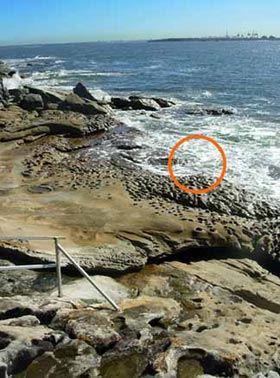

Reference photographs only. Water level, wash and access on the day determine the usable entry and exit.
Conditions and preparation
Assess the water, not just the forecast
The Steps is often planned around slack water or a manageable incoming tide. Check actual flow, swell, surge and visibility; a published tide time does not confirm local conditions.
Choose another site if the platform is being washed, current is difficult to manage or the team cannot confidently use the exit.
Check current dive conditions →A short pre-dive check
- Agree on depth, gas reserves, turnaround and buddy procedures.
- Use sturdy boots and exposure protection suited to Sydney’s water.
- Use a visible dive flag or float and appropriate surface-signalling equipment around boat traffic.
Getting to The Steps
Kamay Botany Bay National Park
Kurnell, Sydney
Use The Steps car park along the main Kurnell park road. Allow time to inspect the water before carrying equipment down the stairs.
Check park gate hours, vehicle-entry fees and current alerts before travelling. Works or closures may affect parking and access; follow the on-site signs.
A few useful answers
Will I see a weedy seadragon?
The Steps has excellent seadragon habitat, but these are wild animals and sightings cannot be guaranteed. A local guide can help you recognise where to look. Learn more in our seadragon identification guide.
Is The Steps suitable for a newly certified diver?
Some routes and dates can suit newer Open Water divers when conditions allow. Tell us your recent experience and check the event’s requirements before booking. If you feel rusty or uncertain about rock entries, ask the team to help you choose a suitable dive.
Where do I meet for a guided dive?
Follow the meeting point and time in your booking confirmation. The calendar includes several sites, and the planned location may change with conditions. Read how our guided shore dives work before choosing a date.
Make time for your next shore dive
Find a date, check the planned site and join a local Divemaster.
Regular guiding is free with your own full tanks and equipment. Hire and air fills cost extra; specialty events may have a fee.

 Trusted by Sydney divers