
Redefining Scuba Diving Safety
Peter Letts Sep 13, 2023
Avelo Diving Safety: Buoyancy, Equipment and Training
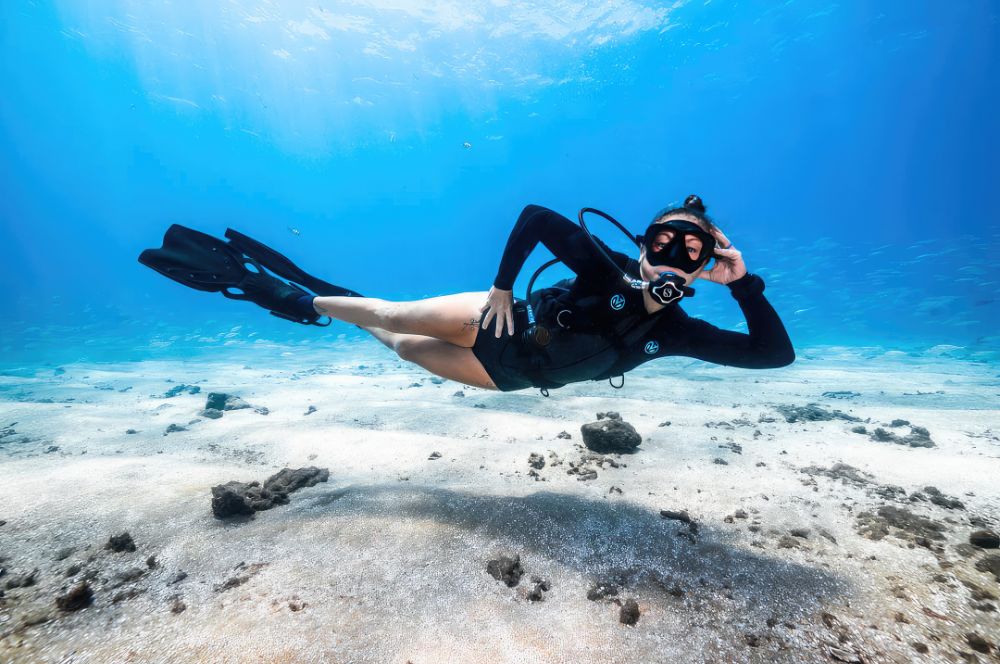
A relaxed dive starts with feeling in control. You can pause to watch marine life, stay alongside your buddy and move through the water without constantly correcting your position. Good buoyancy helps make that possible.
The Avelo System takes a different approach to buoyancy: it uses water as adjustable ballast instead of an expanding air bubble in a conventional buoyancy control device (BCD). This removes one source of depth-related buoyancy changes and can reduce the corrections a diver needs to make.
That is Avelo’s central safety advantage: a more stable starting point for the diver to manage. It does not make diving risk-free or replace good judgement. Understanding the equipment, managing your gas and practising the right procedures remain essential.
Why buoyancy matters for diving safety
Neutral buoyancy means you are balanced in the water rather than continually sinking or floating upwards. It helps you control your depth, avoid contact with the seabed and make a deliberate, controlled ascent.
An uncontrolled ascent can increase the risk of serious injury. Two concerns are often confused:
Decompression sickness involves bubbles forming from inert gas absorbed during a dive. A rapid ascent can increase the risk, but it is not the only factor: decompression sickness can occur even when a diver follows accepted limits.
Lung over-expansion injury can occur when expanding gas cannot escape from the lungs during ascent, including when a diver holds their breath. This is why continuous breathing and controlled ascents matter with every scuba system.
Avelo changes how you manage buoyancy. It does not change the effects of pressure on your body or remove the need to follow your training and dive computer.
How Avelo changes buoyancy control
With a conventional BCD, adding air increases buoyancy and releasing air reduces it. As you ascend, the air inside expands; as you descend, it compresses. Skilled divers manage these changes successfully, but they remain part of the job.
Avelo replaces that variable air space with water ballast inside the Hydrotank. The Hydrotank stores breathing gas in an internal bladder, while the Jetpack carries the harness, battery-powered pump and controls.
Pumping water into the Hydrotank makes the system heavier. Releasing water through the purge valve makes it lighter. The tank’s outside volume remains essentially unchanged, so buoyancy is adjusted by changing its weight rather than inflating or deflating a BCD.
Because water does not appreciably expand or compress over recreational diving depths, the ballast does not create the same expanding-bubble effect during an ascent. You still choose and operate the adjustments; Avelo does not hold your depth automatically.
What stable buoyancy feels like in practice
The benefit is not simply fewer button presses. It is the opportunity to settle into the dive, maintain your position with less equipment adjustment and give more attention to your buddy and surroundings.
However, stable water ballast is not the same as unchanging total buoyancy. Your breathing, the gas you use and changes in your exposure suit still matter. A wetsuit compresses with depth and expands on ascent. A drysuit contains gas that must be managed using the appropriate drysuit skills.
Normal breathing can help you make small changes in position, but it must never become breath-holding or skip-breathing. The aim is comfortable control, not forcing your breathing to compensate for poor weighting.
Conventional scuba can also offer excellent buoyancy control. Avelo’s distinction is that it changes one of the physical factors you need to manage, rather than making skill unnecessary.
What happens if the Avelo pump or battery fails?
The battery powers the water pump, not your breathing regulator. A straightforward loss of pump power stops you adding more water ballast. By itself, it does not switch off your breathing-gas supply or automatically release the water already inside the Hydrotank.
The manual purge valve can still release water without battery power. In other words, losing the ability to pump water in is not the same as losing every means of changing buoyancy.
This does not guarantee that you will remain perfectly neutral. Gas use and exposure-suit changes still affect the dive. Signal your buddy and end the dive using the controlled-ascent and failure-response procedures taught during your Avelo course.
The important distinction is between understanding how a fault behaves and assuming it is harmless. A power problem is a reason to finish the dive, not to continue until the equipment becomes harder to manage.
What about a water leak or a pump that keeps running?
These are different faults with different effects. Losing ballast water makes the system lighter; adding unwanted water makes it heavier. Avelo training includes simulated water-leak and continuously running pump scenarios so you can recognise the problem and practise the appropriate response with an instructor.
What if the internal bladder is damaged?
The Hydrotank’s bladder separates breathing gas from ballast water. It is not an inflatable BCD bladder, so the two should not be treated as identical failure scenarios. However, suspected bladder damage should never be dismissed as harmless. End the dive using your training and have the equipment inspected before further use.
How do you stay afloat at the surface without a BCD?
A correctly configured Avelo setup is designed to provide positive surface buoyancy when the water ballast has been released. Your course teaches you how to establish and check that buoyancy before descending.
Correct weighting is particularly important. The system cannot provide a sudden large increase in lift to compensate for excessive lead. Check your weighting when your suit, equipment, water type or starting fill changes. The Jetpack is not a life jacket and does not guarantee flotation in every situation.
Gas management is just as important as buoyancy
One of the most important differences to learn is how Hydrotank pressure behaves. Pumping water in compresses the breathing gas and raises its pressure, even though no extra gas has been added.
A higher pressure after pumping does not mean you have gained more breathing gas. Avelo divers use the gas-planning, monitoring and reserve procedures taught for the system, rather than interpreting the gauge exactly as they would on a conventional cylinder.
On a compatible, correctly configured computer, Avelo Mode provides an estimate of the percentage of gas remaining, alongside Avelo-specific buoyancy information. It is an optional aid, not automatic buoyancy control or a replacement for gas planning and pressure monitoring.
Maintain the required backup pressure information and stay within your training, gas reserves and no-decompression limits. Feeling relaxed is a benefit to enjoy, not a reason to stretch the dive plan.
Training turns unfamiliar equipment into familiar skills
Avelo training is about more than learning which control adds water. It develops the skills to set up the system, establish buoyancy, monitor your instruments, communicate with your buddy and respond when something does not behave as expected.
For an experienced diver, that means adapting familiar scuba skills to a different system. For a beginner, it means learning those foundations through a full entry-level course. Neither pathway treats equipment as a substitute for understanding.
Before each dive, check the battery, connections, controls, breathing-gas supply and overall equipment condition as taught. Follow the manufacturer’s cleaning and servicing instructions, and do not dive with damaged or malfunctioning equipment.
This article explains the principles. Your Avelo instructor and the current manuals for your equipment provide the operating and emergency procedures you need to practise.
Experience Avelo with Abyss in Sydney
The most useful way to assess Avelo is to learn the system with an instructor, experience the difference underwater and understand how to manage it confidently.
Already a certified scuba diver?
Our Avelo Dive Course combines online preparation with one practical day and two guided shore dives. You will review the equipment and procedures before developing familiarity with the system in the ocean.
The Hydrotank, Jetpack, regulator, weights and dive computer are supplied. Bring your mask, snorkel, fins, boots and suitable wetsuit, or ask about renting those items.
View Avelo course dates and book your place →
Learning to scuba dive for the first time?
Start with our Avelo beginner course, rather than the one-day course for existing divers. It is the pathway for learning your scuba foundations using Avelo equipment.
Explore learning to dive with Avelo →
Have a question about buoyancy, equipment or which course suits you? Use the Avelo chat on this page and tell us whether you are already a certified diver.

 Trusted by Sydney divers