
Explore The Extraordinary: 12 Most Captivating Scuba Diving Destinations Worldwide
Peter Letts Mar 04, 2024
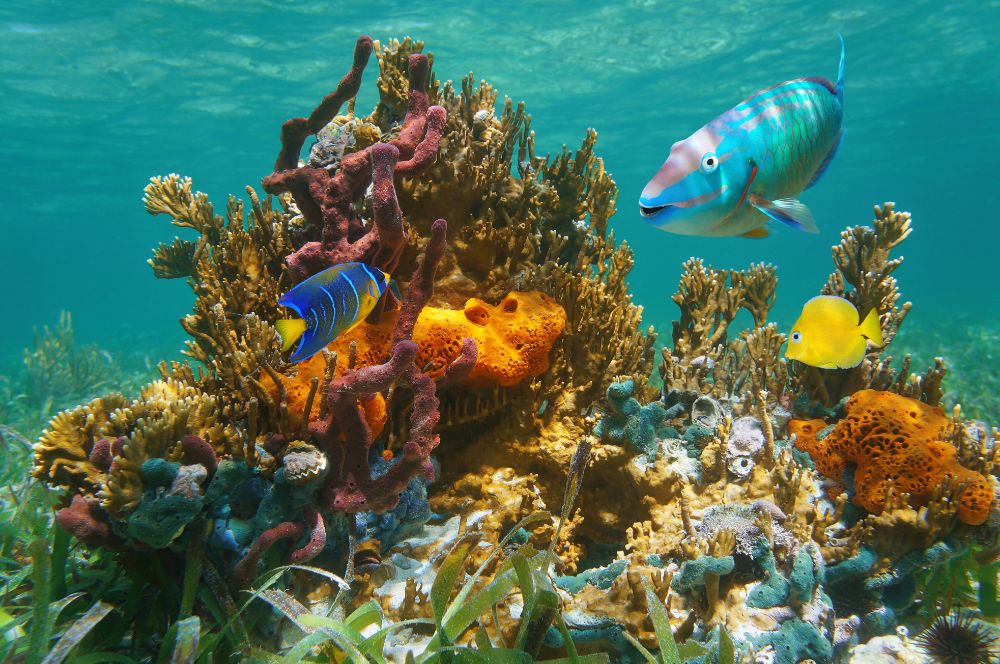
Worldwide dive guide for Sydney divers
Explore the Extraordinary: 12 Most Captivating Scuba Diving Destinations Worldwide
From an easy South Pacific escape to remote current-swept liveaboards, these destinations earn their place through outstanding reefs, wrecks, wildlife and underwater terrain. The right one depends on your experience, interests and preferred way to travel.
No honest guide can name one destination that is “best” for every scuba diver. A recently certified diver looking for relaxed warm-water reefs needs something very different from a wreck diver planning a technical penetration or an experienced traveller chasing pelagic action in open ocean. This curated list is designed for divers travelling from Sydney and compares both the attraction and the practical demands of each place.
Vanuatu comes first for a reason: it combines genuine South Pacific diving with manageable travel and several trip styles, making it a strong first overseas dive holiday without limiting more experienced divers to beginner sites. Explore Abyss’s Vanuatu dive trips from Sydney if that balance sounds right for you.
Wildlife is never guaranteed. Mantas, whale sharks, hammerheads, turtles and other animals move according to natural conditions. Treat seasonal patterns as useful guidance—not a promise—and choose a trip you would value even without one headline encounter.
Compare the Destinations at a Glance
This is a curated guide, not a league table. The order starts with destinations that are especially relevant to Sydney divers, then expands to more remote and demanding journeys.
| Destination | Signature diving | Typical format | Experience note |
|---|---|---|---|
| Vanuatu | Warm reefs, walls, bommies and wrecks | Island-based group trip | Moso-area sites suit varied experience levels; Santo wreck diving is a separate itinerary |
| Great Barrier Reef & Coral Sea | Coral gardens, walls and oceanic reef life | Day boat or liveaboard | Ranges from introductory dives to remote advanced itineraries |
| Fiji | Soft corals, reef passages and shark encounters | Resort or liveaboard | Current and difficulty vary greatly by region and site |
| Papua New Guinea | Reefs, pinnacles, macro life and wartime wrecks | Resort or liveaboard | Remote logistics and regional seasons require planning |
| Raja Ampat | Exceptionally rich reefs, fish life and mantas | Resort or liveaboard | Many signature sites have strong or changing currents |
| Komodo | Drifts, mantas and contrasting northern and southern reefs | Liveaboard or day boat | Tides and rapidly changing current make good guiding essential |
| Philippines | Tubbataha reefs or Coron’s historic wrecks | Liveaboard or island-based | Two very different trips with different skill requirements |
| Palau | Walls, channels, sharks and pelagic action | Island-based boat diving or liveaboard | Current can be strong and site selection matters |
| Chuuk Lagoon | Coral-covered Second World War wrecks | Island-based or liveaboard | Penetration and deeper profiles require specific training |
| Maldives | Thilas, channels, mantas and sharks | Liveaboard or resort | Atoll, monsoon and current shape the experience |
| Egyptian Red Sea | Coral walls, reefs and historic shipwrecks | Resort or liveaboard | Advanced offshore sites differ from sheltered resort diving |
| Galápagos Islands | Big-animal diving in cool, productive water | Expedition liveaboard | Best for experienced, recently active divers |
The Destinations in Detail
Vanuatu: the South Pacific starting point
Vanuatu gives Sydney divers a compelling mix of warm water, tropical scenery and varied diving without requiring an expedition-style trip. Around Moso Island and Havannah Harbour, the appeal is broader than one famous site: coral gardens, bommies, gullies, walls, local wrecks and blue-water pinnacles can all form part of the region’s diving. Paul’s Rock is a standout possibility when weather, current, access and the group’s experience align.
Do not confuse this Efate and Moso region with Espiritu Santo. The SS President Coolidge lies off Santo and belongs to a different itinerary. The wreck begins at about 21 metres and extends to roughly 70 metres; deeper sections and penetrations demand progressively greater depth, wreck or technical training, equipment and gas planning.
For a recently active diver, a well-matched Moso itinerary can be a reassuring first overseas holiday. For experienced divers, the changing terrain and more exposed sites still provide substance. The strength of Vanuatu is the whole trip—good diving, a settled island rhythm and enough variety that the holiday does not depend on a single animal appearing.
Best for: Sydney divers wanting a practical first overseas trip, warm-water reef variety and a land-based group holiday. Planning note: exact sites always depend on conditions and diver suitability.
Great Barrier Reef and Coral Sea, Australia
The Great Barrier Reef is not one dive site. It is a vast system of reefs, islands and habitats, with experiences ranging from sheltered introductory dives to multi-day outer-reef itineraries. Depending on the route, divers may encounter coral gardens, giant clams, turtles, reef fish, walls and reef sharks. Conditions and coral health vary from site to site, so the vessel and itinerary matter more than a generic “Great Barrier Reef” label.
Farther offshore, Coral Sea locations such as Osprey Reef offer oceanic water, steep walls and more exposed diving. Osprey Reef is outside the Great Barrier Reef Marine Park, an important distinction often lost in marketing. Remote trips can involve deeper profiles, current, repetitive diving and long crossings, making them a different proposition from a Cairns day boat.
Compare the reef area, travel time, number of dives and minimum experience when choosing Great Barrier Reef liveaboards from Cairns. For a wider regional comparison, see our guide to Australia’s top scuba diving destinations.
Best for: tropical reef variety and a wide choice of trip formats. Planning note: match the exact itinerary—not just the destination name—to your skills.
Fiji: soft corals and reef passages
Fiji’s reputation for soft coral is well earned, especially around Rainbow Reef, the Somosomo Strait, Bligh Water and the Vatu-i-Ra area. When current feeds the reef, sea fans and soft corals open while anthias, fusiliers and other reef fish fill the water. Beqa Lagoon adds well-known shark-diving experiences, while calmer reefs in other regions can suit less experienced divers.
That variety also makes sweeping claims risky. Conditions around a sheltered Mamanuca reef are not the same as a current-driven passage in the Somosomo Strait. Shark dives are structured, operator-specific activities; they should not be treated as a guaranteed feature of every Fiji holiday. Fiji works best when you choose the region for the kind of diving you want rather than simply booking the nearest resort with a dive centre.
Best for: soft-coral scenery, reef photography and couples or groups mixing diving with island time. Planning note: ask how current, transfers and seasonal weather affect the selected sites.
Papua New Guinea: reefs, wrecks and macro life
Papua New Guinea rewards divers who want biological variety and a sense of remoteness. Milne Bay is known for coral walls, muck diving, macro subjects and Second World War history. Kimbe Bay combines reefs and offshore pinnacles, while Kavieng and Tufi offer their own mixes of passages, pelagic possibilities, walls and wrecks. No single paragraph can describe all of PNG accurately because its dive regions are widely separated.
A resort can provide time to explore one area in depth; a liveaboard can reach more remote reefs and increase the number of daily dives. Either format requires careful logistics, realistic baggage planning and insurance that covers the planned depths, activities and evacuation from a remote location. Current and seasonality vary by region, so a national “best month” is less useful than advice for the exact route.
Best for: experienced travellers who value uncrowded reefs, macro life and varied underwater subjects. Planning note: confirm regional conditions and evacuation cover before committing.
Raja Ampat, Indonesia: biodiversity at reef scale
Raja Ampat, in Indonesia’s Southwest Papua province, sits within the Coral Triangle and is celebrated for extraordinary coral and reef-fish diversity. Dampier Strait can deliver fish-filled reefs, current-fed points and manta cleaning stations, while Misool is associated with intricate limestone scenery, colourful soft corals and rich reef systems. Macro life gives photographers another reason to slow down.
The abundance does not make every dive easy. Current can be powerful or change across a site, and some entries and pickups are demanding. A capable operator will time dives for tides and choose sites for the group rather than pursuing a famous name at any cost. Reaching Raja Ampat also involves more connections and contingency planning than a short South Pacific holiday.
Best for: reef lovers, underwater photographers and experienced divers who want exceptional variety. Planning note: allow generous travel time and be candid about current comfort.
Komodo, Indonesia: dynamic drift diving
Komodo’s reefs are shaped by moving water. Nutrient-rich currents support colourful coral, schooling fish, turtles, sharks and possible manta encounters, while the north and south can feel like different destinations. Sites such as Batu Bolong, Castle Rock and recognised manta areas are famous for good reason, but conditions can change with the tide and weather.
Strong currents—and, at some sites, downcurrents—are not something to minimise in sales copy. Good guides plan around them, brief entry and exit procedures clearly, and change the site when conditions are wrong for the group. Some routes can accommodate divers with moderate experience; the most energetic dives demand strong buoyancy, situational awareness and comfort with negative entries or blue-water pickups.
Best for: confident drift divers wanting dramatic reefs and possible manta encounters. Planning note: compare the season, route and minimum-experience policy—not only the boat.
The Philippines: Tubbataha reefs or Coron wrecks
The Philippines belongs on this list for two very different reasons. Tubbataha Reefs Natural Park is a remote Sulu Sea destination reached by liveaboard during a short operating season, roughly from March to June and always subject to park permits, weather and operator schedules. Its atolls, walls and open-water setting support rich coral communities, turtles, reef sharks and schooling fish, with access controlled to protect the park.
Coron, by contrast, attracts wreck divers to Japanese ships sunk during the Second World War. Some exterior routes and shallower wrecks are accessible to appropriately qualified recreational divers, while deeper dives and penetration require dedicated training, redundant equipment and a conservative plan. Tubbataha and Coron should never be sold as interchangeable versions of a “Philippines dive trip”.
Best for: remote reef liveaboards at Tubbataha or historically significant wreck diving at Coron. Planning note: choose one experience first, then assess the precise certification and recency requirements.
Palau: walls, channels and pelagic action
Palau combines steep walls, reef channels, blue holes, wartime wrecks and encounters with sharks, rays and schooling fish. Blue Corner is associated with strong current and pelagic action, German Channel with possible manta sightings, and Ulong Channel with energetic drift diving when conditions align. Daily site selection should follow tides, weather and the group’s experience.
Use a reef hook only when your guide and local rules permit, with careful placement that avoids living coral. Palau’s well-known Jellyfish Lake is a snorkelling experience, not a scuba dive, and access conditions can change. Keeping those distinctions clear produces a better and more responsible itinerary.
Best for: experienced reef and drift divers who enjoy sharks, walls and varied boat diving. Planning note: current can change quickly, so recent experience matters.
Chuuk Lagoon, Micronesia: wreck diving with respect
Chuuk Lagoon—often called Truk Lagoon in diving history—contains an extraordinary concentration of Japanese ships and aircraft, many of which were sunk during Operation Hailstone in 1944. Decades of coral growth have turned many wreck exteriors into living reefs, where the history and marine life are inseparable.
It is important to describe the destination without treating wartime loss as a spooky attraction. These are historic sites where people died, and human remains and artefacts must be treated with respect. Some shallower exterior dives fit within recreational limits. Deep profiles, overhead penetration and complex interiors require the appropriate wreck or technical training, gases, equipment and guide—not confidence alone.
Best for: wreck divers interested in history, photography and progressive depth options. Planning note: separate exterior sightseeing from penetration when assessing your readiness.
Maldives: atolls, channels and open-ocean life
The Maldives offers thilas, reef channels, walls and drift dives spread across many atolls. Sharks, eagle rays, mantas and whale sharks may be encountered, but patterns vary by atoll, monsoon, current and time of year. There is no single “Maldives season” that guarantees the same water and wildlife everywhere.
Liveaboards suit divers who want multiple dives and access to a broader route; resorts work well for travellers who value a fixed base and more flexibility ashore. Fuvahmulah is known for advanced blue-water shark diving and should be evaluated as a specialist destination, not a standard beginner itinerary. Hanifaru Bay’s famous manta feeding aggregations are experienced by regulated snorkelling because scuba diving is prohibited within the bay.
Check Abyss’s current Fuvahmulah Maldives dive trip for its actual itinerary and eligibility rather than assuming it represents every Maldivian atoll.
Best for: repetitive diving, drifts and possible large-animal encounters. Planning note: choose the atoll and route before choosing the month.
Egyptian Red Sea: coral walls and historic wrecks
Egypt’s Red Sea coast supports both resort-based diving and expedition-style liveaboards. Ras Mohammed and the Straits of Tiran offer reefs, walls and current-fed sites, while the SS Thistlegorm is one of the world’s best-known wartime wreck dives. Farther offshore, the Brothers, Daedalus and Elphinstone are associated with deeper walls, current and pelagic possibilities.
These itineraries are not equal in difficulty. A sheltered resort reef may suit a newer diver; an exposed offshore route or wreck penetration may demand advanced qualifications, recent experience and excellent buoyancy. Current operational conditions and official travel advice should always be checked before an international departure.
Best for: divers wanting coral, walls and wreck history in one region. Planning note: match the northern resort or liveaboard route to your actual experience.
Galápagos Islands, Ecuador: the advanced finale
Galápagos diving is driven by ocean currents and upwelling. Around Wolf and Darwin islands, experienced divers travel for possible encounters with schooling hammerheads, whale sharks, rays and other pelagic life. Elsewhere in the archipelago, sea lions, turtles, penguins and marine iguanas add distinctive endemic and highly adapted wildlife.
The same forces that make the wildlife exceptional also make the diving demanding. Water can be cool, visibility variable, current strong and surface conditions rough. Remote northern sites are usually reached by liveaboard, and a diver must be comfortable with negative entries, rapid descents, surge, blue-water safety procedures and repetitive diving. A certification card without recent experience is not adequate preparation.
Best for: experienced, recently active divers prioritising pelagic wildlife and natural history. Planning note: build current, buoyancy and cold-water confidence well before departure.
Seven Unusual Dive Sites Worth Understanding
A destination guide should not confuse a single attraction with an entire country or dive region. Even so, several unusual sites from the original article deserve to remain—with accurate context, realistic experience requirements and respect for the places and people involved.
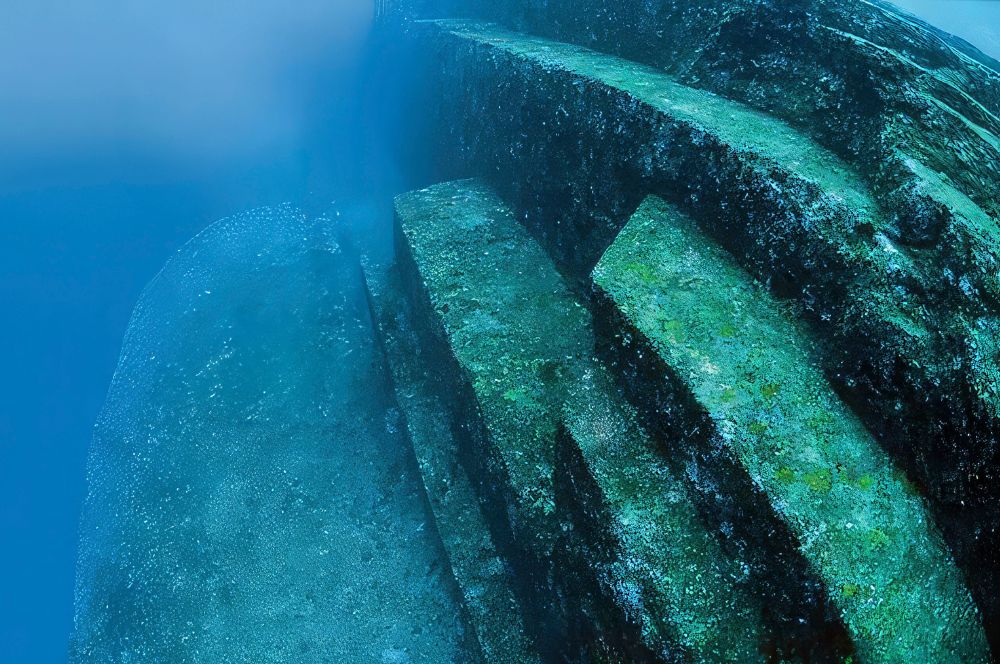
Yonaguni Monument, Japan
Discovered by local diver Kihachiro Aratake in 1986, the Yonaguni Monument is a vast stepped rock formation off Japan’s westernmost inhabited island. Whether it is wholly natural or was partly modified by people remains disputed; descriptions of carved roads, drainage systems or ancient ruins should not be presented as established archaeology.
Exposure to waves and strong current can make the site demanding. It is best approached by experienced divers with a local guide who understands the day’s sea conditions.

Silfra Fissure, Iceland
Silfra is a water-filled fissure within Þingvellir’s broad active rift zone. The popular claim that a diver can literally touch two continental plates at once is inaccurate, and the fissure was not created by the 1789 earthquakes. Its real attractions are exceptionally clear groundwater, layered lava walls and a landscape shaped by tectonic movement.
The water is normally about 2–4°C. Official rules require appropriate certification or recent drysuit experience, a buddy and a maximum diving depth of 18 metres; overhead penetration and solo diving are prohibited.
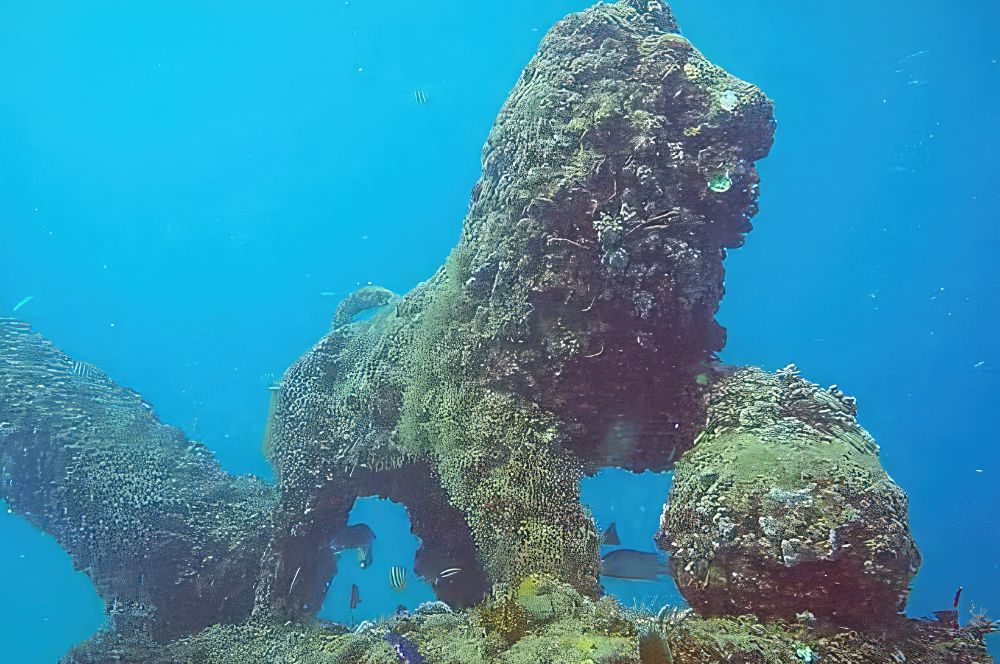
Neptune Memorial Reef, Florida
Neptune Memorial Reef is an underwater cremation memorial and artificial reef off Key Biscayne, near Miami. Cremated remains are incorporated into memorial features as the structure develops into habitat. Calling it simply an “underwater cemetery” misses both its function and its carefully managed memorial purpose.
There is no admission charge to the site, but it is reached by boat. Scuba visitors still need suitable certification, equipment and conditions, and every visit should respect memorial areas and marine life.
MUSA Underwater Museum, Mexico
MUSA in Cancún and Isla Mujeres places more than 500 sculptures across several underwater galleries. The works were designed to provide an alternative visitor attraction and surfaces that marine organisms can colonise, but access differs by location.
Manchones contains hundreds of works at scuba depths of roughly 8–10 metres. The shallower Punta Nizuc gallery is better known for snorkelling and glass-bottom viewing. Do not assume every sculpture is accessible through every activity.
Lyngstøylsvatnet, Norway
Lyngstøylsvatnet formed after a 1908 rockfall dammed the Norang River and flooded a farm landscape and small forest. Beneath the cold, clear freshwater, divers can see an old road, farmhouse foundations, farm walls, a gateway and submerged trees.
It is more accurate to call this a flooded farm valley than a perfectly preserved “sunken village”. Cold-water protection, local access guidance and careful buoyancy around fragile remains are essential.
Salem Express, Egypt
The Salem Express struck a reef near Safaga in December 1991 and sank rapidly with major loss of life. It is a mass-fatality site, not a spooky attraction, and should be described and dived with restraint. Personal effects and the wreck itself must never be disturbed.
The wreck lies on its starboard side across a recreational-to-advanced depth range. Egypt’s diving authority prohibits penetration, so visits must remain on the exterior and follow current local rules and operator briefings.
Cenote Angelita, Mexico
At Cenote Angelita, a dense hydrogen-sulphide layer around 30 metres creates a river-like optical illusion, with branches and debris appearing to rest along a submerged bank. It is not a literal underwater river.
The depth, low light and reduced visibility around the layer make this an advanced, experience-dependent guided dive—not a casual beginner attraction. Divers must use conservative deep-dive planning and must not enter overhead cave passages beyond their certification.
How to Choose the Right Dive Holiday
The most spectacular destination on paper can be the wrong trip if its daily diving does not suit you. Before paying a deposit or booking separate flights, compare the exact itinerary against these six factors.
Use wildlife seasons to refine an already suitable trip, not to justify an itinerary beyond your experience. A well-chosen reef holiday with realistic expectations will usually be more rewarding than chasing one promised animal at the wrong site or time.
Start with Vanuatu—or compare the wider world
For many Sydney divers, Vanuatu is the most practical place to turn inspiration into a real overseas dive holiday. If you are considering several regions, compare Abyss’s current overseas dive holidays and liveaboards, then open the exact trip page for dates, inclusions, eligibility and availability.
Frequently Asked Questions
What is the best first overseas dive destination from Sydney?
Vanuatu is a strong first choice for a recently active diver because suitable itineraries can combine warm water, varied reefs, manageable travel and a settled island base. That does not mean every Vanuatu site suits every beginner. Certification, recency, conditions and the operator’s site plan still matter.
Which destinations suit Open Water divers?
Parts of Vanuatu, Fiji, the Great Barrier Reef, PNG, the Maldives and other destinations can suit Open Water divers, but suitability belongs to the exact site and itinerary—not the country. Ask about depth, current, entry method, expected surface conditions and any minimum logged-dive requirement.
Which destinations are better for experienced divers?
Galápagos, many Komodo and Palau sites, remote Coral Sea routes and current-affected Raja Ampat itineraries generally reward strong buoyancy and recent open-ocean experience. Wreck penetration in Chuuk or Coron requires specific overhead training. An operator may apply stricter requirements than the certification agency’s minimum.
Should I choose a dive resort or a liveaboard?
A resort offers a stable base, rest days and more options for non-divers. A liveaboard can reach remote sites and maximise the number of dives, but it commits you to a boat routine and repetitive diving. Choose for the itinerary and travelling party, not on dive count alone.
When is the best time for an overseas dive holiday?
There is no universal best month. Monsoons, current, water temperature, animal movements and liveaboard operating seasons differ by region—and sometimes within the same country. Check the precise route, then balance likely conditions against crowds, cost and your priority encounters.
Are mantas, whale sharks or hammerheads guaranteed?
No. Responsible operators describe where and when encounters may be more likely, but wild animals choose where they go. Avoid any trip sold on a guarantee and make sure the reefs, wrecks or terrain would still make the journey worthwhile.
Do I need Advanced Open Water or Nitrox?
Requirements are itinerary-specific. Advanced training may be required when planned dives exceed Open Water limits, and Nitrox is often useful for repetitive no-decompression diving when used within your certification and analysed correctly. Neither qualification substitutes for recent experience or good buoyancy.
How should I prepare for a major dive trip?
Build recent dives in conditions relevant to the trip, refresh skills if needed, service personal equipment, practise buoyancy and safety procedures, review the operator’s packing list and confirm medical and insurance requirements. For current, cold water, wrecks or liveaboards, prepare well before departure rather than on the first dive.

 Trusted by Sydney divers