
Top 5 Most Dangerous Shark Species
Peter Letts May 31, 2024

Top 5 Most Dangerous Shark Species
This guide explains the five shark species most commonly associated with serious incidents, then puts that fear into context. If you are in Sydney, it also shows how divers can safely experience sharks in the wild through guided, conservation-minded shark dives with Abyss Scuba Diving.
Venturing into the vast blue, it is easy to feel a sense of trepidation. The fear of becoming prey to one of the ocean’s top predators has been fuelled by films, headlines and myths. But sharks are not the indiscriminate human hunters many people imagine. Most shark species are not a significant threat to people, and serious incidents remain uncommon compared with the number of people who swim, surf, snorkel and dive every year.
Sharks have evolved over millions of years to become perfectly adapted predators in their own environments. Their teeth, senses and movement are designed for catching natural prey, not for targeting humans. When incidents occur, they are usually linked to mistaken identity, curiosity, feeding behaviour, low visibility or human activity in shark habitat.
Dangerous Shark Headlines vs Sydney Shark Diving Reality
Before looking at the top five species, it helps to separate headline fear from the kind of shark encounters divers actually seek around Sydney.
The Great White Shark: Apex Predator of the Sea

When people hear the word “shark,” the great white shark often comes to mind first. Carcharodon carcharias is an apex predator, famous for its size, power and role in marine ecosystems. It is also one of the shark species most commonly associated with serious human incidents.
But that does not mean great whites are hunting people. Many incidents involving great whites are believed to involve investigation, mistaken identity or overlap between humans and natural feeding areas. A surfer, swimmer or floating object may be investigated in the way a shark investigates unfamiliar prey or movement.
Great white sharks also play a crucial role in ocean health by helping maintain balance in marine food webs. They prey on sick, weak or vulnerable animals and influence the behaviour of other species. Understanding their ecological importance helps replace fear with respect.
Tiger Sharks: The Ocean’s Opportunists

The tiger shark is another species that commands caution and respect. Its broad diet has earned it a reputation as one of the ocean’s most opportunistic feeders. Tiger sharks eat fish, turtles, rays, birds, marine mammals and, at times, unusual objects that end up in the sea.
This feeding style is one reason tiger sharks appear on dangerous shark lists. They are large, powerful and curious, and they often use their mouths to investigate. However, like other sharks, they are not mindless aggressors. Interactions usually occur where human activity overlaps with shark habitat and feeding zones.
Bull Sharks: Masters of Freshwater and Saltwater

Bull sharks are often considered among the most dangerous sharks to humans because they can live in both saltwater and freshwater. Their ability to move into rivers, estuaries and coastal shallows means they may overlap with swimmers, fishers and other water users more often than many offshore shark species.
Bull sharks are powerful, adaptable and capable predators. Their reputation is not about malice; it is about habitat overlap, territorial behaviour, feeding patterns and the environments in which humans may encounter them. Knowing where and when bull sharks are more likely to be present helps reduce risk.
Oceanic Whitetip Sharks: The Open Ocean Threat

Oceanic whitetip sharks live far from shore and are known for bold, persistent behaviour in the open ocean. Historically, they have been associated with shipwreck and open-water survival incidents, where people were stranded in shark habitat for extended periods.
Their danger is very specific: remote, open-ocean situations where food, injury, panic and prolonged exposure may be involved. For most swimmers and recreational divers near the coast, oceanic whitetips are not a common encounter. They are a reminder that shark risk depends heavily on context.
Shortfin Mako Sharks: Speed Demons of the Deep
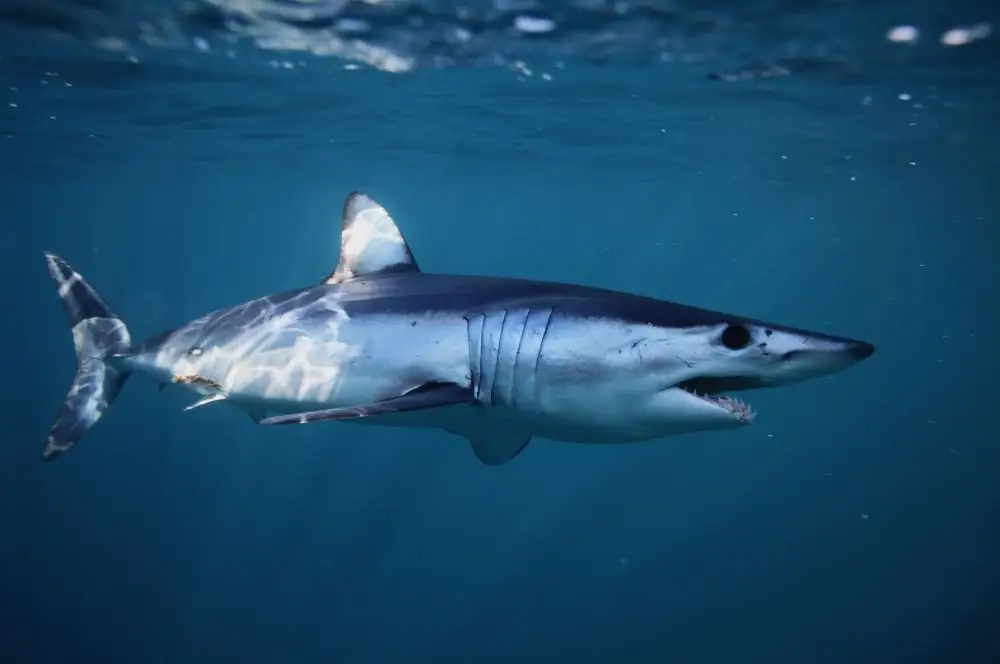
Shortfin mako sharks are among the fastest shark species. Built for speed and open-ocean hunting, they prey on squid, tuna and other fast-moving fish. Their agility, power and offshore lifestyle make them impressive predators.
Human interactions with makos are less common than with some coastal sharks, but their speed and strength mean they deserve respect. They are not a typical shark-diving target around Sydney for recreational divers, and they are very different from the grey nurse sharks and wobbegongs divers commonly encounter on local guided dives.
Other Notable Sharks People Ask About
Beyond the species above, divers and ocean users often ask about sand tiger sharks, hammerheads, wobbegongs, Port Jackson sharks and blue sharks. Not all sharks with fierce appearances are dangerous, and not all dangerous species are commonly seen by recreational divers.
Grey Nurse Sharks: Fierce-Looking but Misunderstood
The grey nurse shark, also known internationally as the sand tiger shark or spotted ragged-tooth shark, has protruding teeth that make it look intimidating. In reality, grey nurse sharks are generally slow-moving and non-aggressive when divers keep respectful distance and avoid disturbing them.
Around Sydney, grey nurse sharks are the species that make Magic Point famous. For many divers, seeing them calmly cruise past is the moment fear changes into fascination.

Hammerhead Sharks: Unique Hunters
Hammerhead sharks have one of the ocean’s most recognisable silhouettes. Their wide heads improve their ability to sense and locate prey such as rays, fish and octopus. Larger hammerhead species can be impressive predators, but most hammerhead encounters do not involve aggression toward people.

Understanding Shark Behaviour
Understanding shark behaviour is the best way to replace fear with respect. Sharks rely on finely tuned senses to detect vibration, scent, movement and electrical signals. They are most likely to investigate when water is murky, prey is active, fishing is taking place, or a swimmer or surfer resembles natural prey from below.
Environmental conditions also matter. Time of day, water clarity, baitfish, river outflows, seal activity and fishing can all influence where sharks are likely to be. Most safety advice is really about avoiding the situations that make a mistaken encounter more likely.
Shark Attack Statistics: How Big Is the Risk?
Shark attack statistics show why the topic attracts attention, but also why perspective matters. The International Shark Attack File reported 65 confirmed unprovoked shark bites worldwide in 2025. That was close to the recent five-year average, despite year-to-year fluctuations. The same report recorded 12 confirmed shark-related fatalities, nine of them assigned as unprovoked.
These numbers are serious for the people affected, but they are small compared with the number of people who enter the ocean every year. The practical lesson is not to fear all sharks. It is to understand species, location, activity, conditions and behaviour.
How to Stay Safer in Shark Habitat
The ocean is wild, and no advice can remove all risk. However, sensible behaviour can reduce the chance of an unwanted encounter.
-
Avoid swimming or surfing at dawn, dusk or night in areas known for shark activity.
-
Stay away from bait balls, diving birds, seal activity, fishing zones and areas where fish are being cleaned.
-
Avoid murky water, river mouths after heavy rain, and areas where visibility is poor.
-
Swim, snorkel and dive with others rather than alone.
-
Do not wear shiny jewellery that may resemble fish scales underwater.
-
If diving with sharks, follow your guide, control your buoyancy, move calmly and never touch, chase or feed wildlife.
Summary
Sharks are some of the most remarkable and misunderstood animals in the ocean. Great white, tiger, bull, oceanic whitetip and shortfin mako sharks are often discussed as dangerous because of their size, behaviour, habitat and incident history. But the more useful truth is that most sharks are not a threat to humans, and many so-called dangerous encounters are shaped by context.
For divers in Sydney, shark fascination can become something positive. Guided shark dives with Abyss Scuba Diving allow certified divers to experience grey nurse sharks and other local species respectfully, safely and with a stronger conservation mindset.


 Trusted by Sydney divers