
Improve efficiency
Refine relaxation, streamlining, turns, finning and line technique so that effort is directed where it is useful.
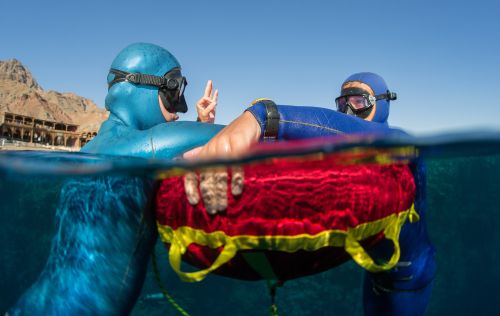
Reaching a new depth is an incredible feeling
Who should take this course?
Achieving a new freediving time or reaching a new depth is an incredible feeling. It satisfies that very personal desire to do your best and be proud of what you can accomplish. The PADI Advanced Freediver course is designed to fulfil that personal need to refine and improve your freediving skills, allowing you to progress slowly while learning how your body performs during apnea.
Availability: Contact us for booking information
Progressive PADI freediving training • Sydney
Refine your static, dynamic, free-immersion and constant-weight skills while strengthening the buddy and rescue procedures needed for more advanced recreational freediving. Progress steadily under instructor supervision without treating depth or breath-hold time as a race.
Build on your foundations
The PADI Advanced Freediver course is for certified freedivers ready to deepen their understanding of apnea, improve efficiency and develop more demanding confined- and open-water skills. Training expands on relaxation, equalisation, body position, line diving, safety and rescue.
The course includes measurable certification requirements, but responsible progression remains individual. Your instructor controls the training plan according to your current skills, recovery, conditions and demonstrated readiness.
Refine, do not rush
Move beyond basic competence with a structured approach to more challenging performance, deeper line work and stronger safety skills.
Refine relaxation, streamlining, turns, finning and line technique so that effort is directed where it is useful.
Progress with free immersion and constant weight in the PADI Advanced Freediver training range under controlled supervision.
Expand buddy positioning, direct supervision, problem recognition and rescue responses for more advanced training sessions.
Advanced knowledge and application
Build a more deliberate approach to preparation, performance, recovery and buddy support.
Extend your understanding of breath-hold responses, pressure, recovery, surface intervals, progressive training and personal limits.
Use calm preparation, stretching when appropriate and effective recovery breathing without hyperventilation or forced performance.
Refine relaxation, buddy communication, surface supervision and recovery during stationary breath-hold practice.
Develop horizontal efficiency, pacing, turns, direct buddy supervision and safe recovery in confined water.
Refine an appropriate equalisation technique and learn to stop the descent or return to the surface when equalisation is not easy or pain occurs.
Improve line orientation, descent, body position, turns, ascent technique and recovery during supervised depth sessions.
Plan one-up, one-down supervision, meet the ascending diver at the taught point and monitor closely through surface recovery.
Practise risk reduction, recognition and response for a loss of motor control, blackout or an unresponsive diver.
Course structure
The course progresses from independent knowledge development to confined-water refinement and supervised open-water application. Abyss confirms the actual schedule when the course is arranged.
Complete the advanced section of PADI Freediver eLearning and review the material with your instructor before in-water performance.
Refine preparation, static apnea, dynamic apnea, buddy supervision, recovery and rescue in a controlled environment.
Practise free immersion, constant weight, line safety, deeper buddy procedures and rescue under direct instructor supervision.
Performance-based course: Abyss does not currently publish a fixed duration for this course. The schedule and number of sessions depend on course organisation, weather, conditions, student readiness and successful completion of the required skills.
Certification requirements
These numbers are minimum certification objectives completed within the full set of knowledge, technique, safety and rescue requirements. They are not guaranteed results or targets to attempt without direct supervision.
At least 2 minutes 30 seconds for adults, or 2 minutes for students younger than 18.
At least 50 metres for adults, or 40 metres for students younger than 18.
At least 20 metres for adults, or 15 metres for students younger than 18.
PADI Advanced Freediver training develops skills in the 16–24 metre range for adult students. PADI lists a maximum depth of 20 metres for students younger than 18. Actual training depth remains subject to age standards, equalisation, conditions, previous performance, student wellbeing and instructor judgement.
Before you enrol
You must be at least 15 years old. Modified performance requirements apply to students younger than 18, and parent or guardian signatures are required where applicable.
Hold PADI Freediver certification or a qualifying certification from another recognised freediving organisation. Abyss must confirm equivalency before enrolment and may require a knowledge and skills assessment.
Complete the required freediving medical history form and provide physician-signed clearance before in-water training when the form indicates it is required.
PADI recommends Emergency First Response Primary and Secondary Care, or qualifying CPR and First Aid training, completed within the past 24 months. Ask Abyss whether it should be completed before your course.
Equipment and logistics
Advanced training normally uses a suitable mask, snorkel, freediving fins, exposure protection, weight system and an appropriate timing or depth device. Open-water sessions also require an instructor-managed buoy, line and safety setup.
The live Abyss product does not currently publish equipment inclusions, rental costs, course price or a fixed schedule. Tell the team what you own so they can confirm sizing, suitability, hire options, meeting points and transport arrangements.
Advanced freediving safety
Do not hyperventilate—whether through fast, deep or deliberately manipulated breathing—before a breath-hold. Lowering carbon dioxide can delay the urge to breathe while oxygen falls, increasing the risk of loss of motor control or blackout.
Use one-up, one-down direct buddy supervision, appropriate surface intervals and the recovery procedures taught by your instructor. The buddy must remain attentive during the dive, ascent and critical period after surfacing.
Never force equalisation or continue through pain. Abort the descent and return to the surface when equalisation is not easy, discomfort develops, technique deteriorates or the planned limit is reached.
Before you enquire
You need PADI Freediver certification or a qualifying freediver certification from another organisation. Send your certification details to Abyss so an instructor can confirm equivalency.
Abyss does not currently publish a fixed duration. The performance-based course includes knowledge development, confined water and at least two open-water sessions. Contact the team for the planned schedule and allow for weather or additional training needs.
No result is guaranteed. Those are supervised certification objectives for adult students, completed only when the instructor considers the attempt appropriate. Certification also depends on knowledge, technique, safety, rescue and the other required skills.
Yes. Students aged 15–17 work to modified minimums of 2 minutes static apnea, 40 metres dynamic apnea and 15 metres constant weight, together with the other course requirements.
The current product page does not specify equipment inclusions. Confirm what you need to bring, what can be hired, the suitability of your existing equipment and all costs before scheduling the course.
No. Freediving requires a suitably trained, attentive buddy providing direct supervision and capable of performing the rescue procedures appropriate to the planned activity.
The site, timing or date may change. The instructor makes the final decision based on weather, water conditions, student readiness and the training objectives.
This course is currently listed as contact-only. Ask Abyss to confirm availability, price, inclusions, equipment hire, medical paperwork and booking terms.
Continue learning
Explore preparation, depth technique, breath-hold practice and responsible spearfishing before discussing your next training step with an instructor.
Send Abyss your current certification, age, recent freediving experience and equipment details. The team will confirm equivalency, availability, price, schedule, medical paperwork and what is included.

 Trusted by Sydney divers


