
Uncover The Padi Divemaster Superhero Journey!
Peter Letts Apr 13, 2022

PADI'S FIRST PROFESSIONAL RATING
The 7 Real Superpowers of a Great PADI Divemaster
No cape. No shortcuts. A great Divemaster earns trust by noticing what others miss, staying calm when conditions change and helping every diver feel supported.
MISSION BRIEFING
What is a PADI Divemaster?
A PADI Divemaster is a trained dive leader and PADI's first professional-level rating. Divemasters guide certified divers, assist PADI Instructors and help plan, organise and supervise dive activities within their training, current PADI Standards and local operating requirements.
Recreational training teaches you to manage your own dive. Divemaster training teaches you to help manage the whole diving experience: the people, equipment, site, timing, communication and changing conditions. The transition is less about looking heroic and more about becoming dependable.
The best Divemaster rarely needs a dramatic rescue. Their preparation and awareness keep small problems small.
THE POWER SET
Seven powers that are trained, not inherited
A certification card is not the costume; professional conduct is the proof. These are the practical skills divers notice when a good Divemaster is at work.
Radar
Situational awareness
A loose cylinder strap, a diver breathing quickly, a change in current or a missing piece of equipment can become a bigger problem if nobody notices. A Divemaster learns to scan the whole scene and act early.
The Calm Field
Composure under pressure
A great Divemaster makes calm contagious. Rescue readiness matters, but so do a steady voice, unhurried movements and the judgement to pause, change or end a plan before stress escalates.
The Universal Translator
Clear briefings and communication
Good briefings turn a complex dive into a memorable plan. The route, hazards, hand signals, buddy procedures, turnaround point and emergency actions should be understood—not merely recited.
The Internal Compass
Navigation and site awareness
Compass skills matter, but so do depth contours, surge, light, sand ripples and local landmarks. Strong Divemasters build a mental map and adapt the route to the group and conditions. You can also sharpen this skill with the Underwater Navigator course.
Slow-Motion Control
Role-model dive skills
When assisting students, a skill must be controlled and exaggerated enough to understand. Trim, buoyancy, finning and equipment handling also need to set an example throughout the dive.
The Team Amplifier
Helping everyone perform better
Divemasters support Instructors, welcome nervous divers, coordinate equipment and tackle unglamorous jobs without needing applause. They make the whole team more capable.
The Ocean's Voice
Responsible underwater leadership
By modelling good buoyancy, respectful wildlife behaviour and low-impact diving, a Divemaster can help every guest become a better ocean visitor. Local knowledge brings encounters to life without turning a dive briefing into a lecture. Explore Abyss's Sydney marine life dives and eco-friendly diving guide for practical ways to dive with care.
PREVENTION OVER DRAMA
The least dramatic hero at the dive site
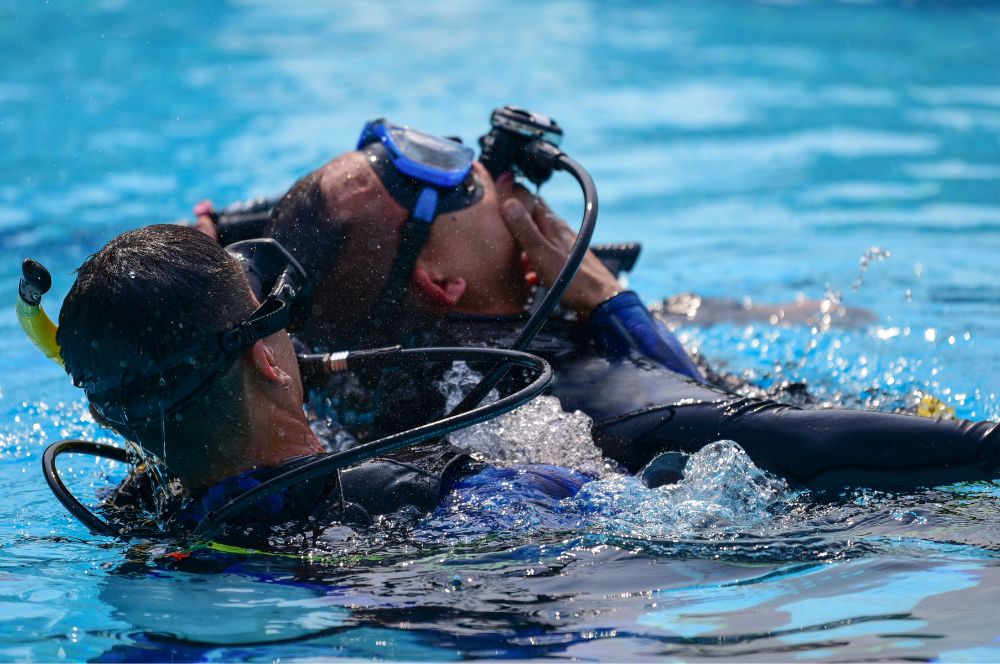
Movies celebrate the last-second save. Professional dive leadership values the earlier decision: checking a concern before entry, adjusting the route, pairing buddies thoughtfully, slowing the group or cancelling when conditions no longer fit the plan.
A Divemaster is not invincible. Their real strength is recognising limits and knowing when to involve the Instructor, skipper, dive centre team or emergency services.
Good judgement often looks like nothing happened. That is the point.
BEHIND THE MASK
The invisible work behind a successful dive
The mission begins before anyone enters the water and continues after the last diver is safely accounted for.
Prepare the scene
- Review the site, weather and water conditions
- Help organise equipment, paperwork and headcounts
- Understand diver experience, comfort and special needs
- Deliver or support a clear, site-specific briefing
Lead with awareness
- Position for effective supervision and communication
- Navigate the planned route and monitor changing conditions
- Watch the group, not only the scenery
- Assist calmly while staying within the dive plan and role
Close the loop
- Confirm every diver is safely out of the water
- Support equipment care, records and site pack-down
- Debrief the dive and answer appropriate questions
- Share useful observations with the professional team
KNOW THE BADGE
What a Divemaster can—and cannot—do
Professional training expands your responsibility, but it does not create unlimited authority. Exact privileges depend on current PADI Standards, your active status, additional ratings, local law and the dive operator's procedures.
WITHIN THEIR TRAINING, A DIVEMASTER CAN
- Guide and supervise certified divers
- Assist PADI Instructors during training
- Help plan, brief and manage dive activities
- Conduct specified PADI programs when authorised and qualified
- Mentor divers and model sound diving practices
THE RATING DOES NOT AUTOMATICALLY
- Qualify you to teach full core courses such as Open Water Diver
- Allow you to ignore site, vessel or operator requirements
- Replace the responsibilities of an Instructor, skipper or emergency service
- Guarantee employment in Australia or overseas
- Make any diver immune to risk or human error
To exercise professional privileges, a PADI Divemaster generally needs current professional membership and must meet any applicable insurance, workplace, visa and local regulatory requirements. Always check the current standards and the requirements of the role.
THE ORIGIN STORY
From capable diver to trusted leader
People often start because they love diving. The professional shift happens when helping somebody else succeed becomes as rewarding as your own dive.
Need an earlier step in the pathway? Start with the PADI Open Water course or build the rescue skills required for professional training through the PADI Rescue Diver course. Check the live Divemaster course page for the latest prerequisites and documentation requirements.
THE TRAINING MONTAGE
How training develops the powers
There is no radioactive shortcut. Knowledge, repetition, coaching and supervised experience turn solid dive skills into reliable leadership habits.
Dive knowledge and planning
Strengthen theory, risk awareness, site planning, briefings and the judgement needed to support safe recreational dive operations.
Water skills and fitness
Complete waterskills assessments and refine the 24-skill circuit until demonstrations are controlled, clear and easy for students to follow.
Professional scenarios
Practise mapping, search and recovery, deep-dive scenarios, emergency planning, site setup and managing dive activities.
Supervised leadership
Assist Instructors, work with real divers and learn how a professional team makes decisions before, during and after a dive.
CHOOSE YOUR PATHWAY
Direct course or Divemaster internship?
Both pathways can lead to the same professional goal. The best choice depends on your current qualifications, experience and the amount of mentoring you want around the formal course.
THE DIRECT ROUTE
PADI Divemaster Course
Best fit if you are already Rescue-qualified, have current CPR and first aid, meet the medical requirement and have at least 40 logged dives.
Focus on the formal professional program and use the live course page for current schedules, inclusions and eligibility.
View the Divemaster CourseTHE IMMERSIVE ROUTE
Divemaster Internship
Best fit if you need prerequisites, more logged dives, sustained mentoring or broader experience inside a working dive centre.
The internship builds the pathway around your starting point before and during the professional stage.
Explore the Divemaster InternshipStill comparing options? See all PADI diving internships or contact Abyss so the team can map the right sequence from your current certification and logged dives.
THE READINESS TEST
Are you ready for the mission?
The strongest candidates want the responsibility, not only the title. Ask yourself whether these statements sound like you.
- I enjoy helping another diver succeed as much as completing my own dive.
- I can accept direct feedback and keep practising when a skill is not yet good enough.
- I will prepare, carry, check and clean equipment without seeking applause.
- I can be patient with nervous, rusty or inexperienced divers.
- I am willing to follow standards when a shortcut looks easier.
- I can put the group plan ahead of the dive I personally hoped to have.
THE NEXT CHAPTER
Where the mission can lead
A Divemaster rating can support roles at dive centres, on boats and at resorts, as well as guiding, mentoring and further professional development. It is also the usual first professional step toward becoming a PADI Instructor. Employment, however, depends on ability, experience, current professional status, available positions, local requirements and legal work rights—it is never guaranteed by the certification alone.
DO NOT CONFUSE THE TITLES
Divemaster is not Master Scuba Diver
PADI Master Scuba Diver is a high recreational recognition. PADI Divemaster is the first professional rating. Read the full Master Scuba Diver versus Divemaster comparison.
Want to keep building? Explore the PADI Instructor internship, the standard Instructor Development Course or the broader Abyss training hub.
FIELD REPORTS
What divers say about training with Abyss
Hear from divers who have learned, trained and dived with the Abyss team.
INTELLIGENCE FILES
PADI Divemaster FAQs
Is PADI Divemaster the first professional diving level?
Yes. PADI Divemaster is PADI's first professional-level rating. It marks the move from managing your own recreational dives to taking defined leadership and support responsibilities within the limits of your training and current standards.
What can a PADI Divemaster do?
A Divemaster can guide certified divers, assist PADI Instructors, support dive operations and conduct specified PADI activities when qualified and authorised. Exact duties depend on current PADI Standards, local law and the procedures of the dive operator.
Can a Divemaster teach scuba courses?
Not full core PADI courses such as Open Water Diver simply by holding the Divemaster rating. Divemasters may conduct certain specified programs, and additional training can expand their scope. An Instructor rating is required to teach and certify the main PADI diver courses independently.
Do I need 40 or 60 logged dives?
You normally need at least 40 logged dives to begin the formal PADI Divemaster course and at least 60 logged dives to be certified. Other prerequisites—including Rescue-level training, recent CPR and first aid, and medical clearance—also apply.
Should I choose the direct course or the internship?
Choose the direct course when you already meet the entry requirements and want to focus on the formal Divemaster program. Consider the internship when you need prerequisites, logged dives, longer mentoring or broader experience in day-to-day dive-centre operations.
Is Divemaster the same as Master Scuba Diver?
No. Master Scuba Diver is a non-professional recreational recognition. Divemaster is a professional rating with defined leadership and instructional-assistant responsibilities.
Does becoming a Divemaster guarantee paid work?
No. The rating can open a professional pathway, but employment depends on competence, experience, current professional status, local demand, role-specific requirements and legal work rights.
YOUR NEXT MISSION
Train the powers that other divers can rely on
A Divemaster card does not hand you superpowers. Training gives you the tools, repetition turns them into habits, and using them for other divers is what makes them matter.

 Trusted by Sydney divers